



Aluminum Oxide Ceramic Lining
Description
Technical Parameters

Products Description
Aluminum oxide ceramic lining is made by sintering high-purity alumina raw materials and is designed specifically for industrial equipment exposed to continuous wear, particle impact, and material flow friction. Unlike traditional metal protection methods that may gradually lose thickness during grinding operations, a dense ceramic structure helps maintain stable performance during long-term operation while reducing damage to the original equipment body.
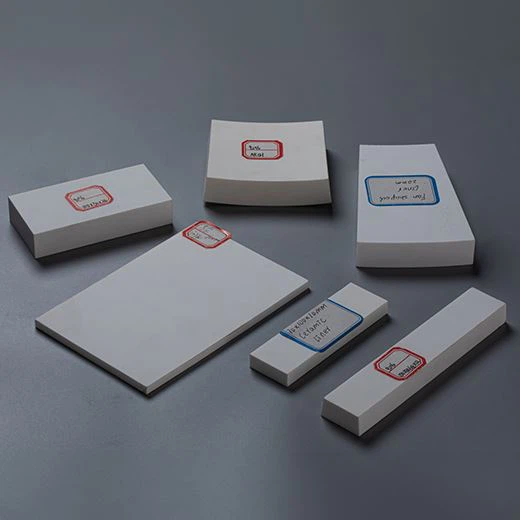
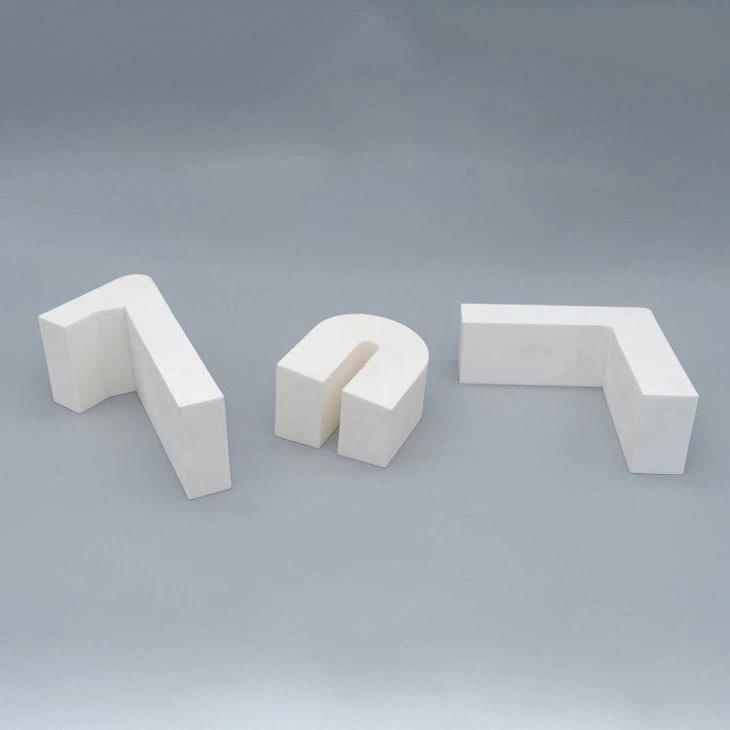
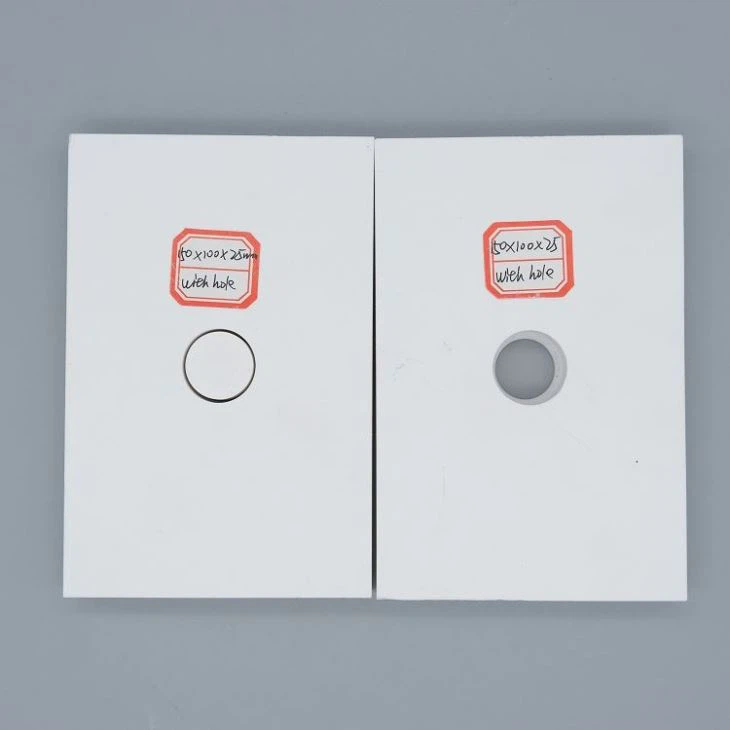
According to the shape of the equipment substrate, lining products are divided into flat tiles, curved bricks, tubular linings, and customized shaped parts. Flat tiles are suitable for large flat equipment such as hoppers and chutes; The arc-shaped bricks are matched with cylindrical equipment such as cyclone separators and ball mills; The straight pipe protection adopts a tubular lining; Irregular positions such as elbows and reducers can be customized with irregular parts according to equipment drawings. This lining forms a continuous protective layer on the surface of the equipment through modular assembly. It has excellent chemical stability, can resist the erosion of most acid, alkali, and salt media, and is compatible with dry material transportation and wet slurry processing scenarios.
advantage
1. Effectively prevent continuous wear and tear of materials
Industrial equipment used for transporting minerals, coal, cement materials, and powders is often subjected to long-term surface damage caused by friction and particle impact. Ceramic lining serves as a protective layer between the equipment surface and the grinding material, reducing direct damage to the foundation structure and helping to extend the service life of the machinery.
2. Stable performance under harsh operating conditions
Unlike ordinary protective materials that may experience rapid deformation or surface damage, ceramic materials maintain their structural stability during long-term operation. Aluminum oxide ceramic lining provides reliable protection for equipment exposed to repeated impacts, material sliding, and continuous wear.
3. Improve equipment reliability and reduce downtime
Unexpected equipment maintenance may disrupt production plans and increase operational costs. Ceramic lining helps reduce maintenance frequency and provide more predictable equipment performance by protecting high wear areas such as pipelines, chutes, hoppers, and transfer points.
4. Adaptive design for different industrial equipment
The issue of industrial wear and tear is rarely the same. Some areas will experience strong impacts, while others will mainly suffer from sliding wear. Ceramic lining systems can be designed with different thicknesses, shapes, and installation methods based on actual working conditions to improve the protection efficiency at specific locations.
Products Parameter
| Item/Product | HA92% | HA95% |
| Al2O3 (%) | 92±0.5 | 95±0.5 |
| Bending Strength(MPa) | ≥220 | >280 |
| Fracture Toughness (MPam ½) | >3.6 | >3.9 |
| Rockwell Hardness (HRA) | >82 | >88 |
| Wear Volum (cm3) | <0.5 | <0.3 |
| Density (g/cm3) | >3.6 | >3.7 |
| Viker Hardness (Hv50) | ≥1050 | ≥1150 |

Production process
Its production process is relatively complex, mainly including several steps such as raw material preparation, molding, sintering, and post-processing. High purity alumina powder needs to be selected during the production process, and necessary mixing and grinding should be carried out to ensure the uniformity of the raw materials. Then, the mixed raw materials are molded using methods such as pressure molding or injection molding to obtain the desired shape of the blank.
Next, the billet needs to undergo a high-temperature sintering process. The sintering temperature is usually between 1500 degrees Celsius and 1700 degrees Celsius, which not only enhances the density of the material but also improves its mechanical strength. After sintering, the lining bricks will undergo cooling and necessary post-processing such as grinding and polishing to ensure their surface smoothness and flatness.
application
1. In Power Plant
| System |
Application |
|
Coal conveying system |
Coal conveying pipeline |
|
Belt joint hopper |
|
|
Coal hopper |
|
|
Raw coal hopper |
|
|
Coal feeder |
|
|
Coal pulverizing system |
Coal mill drum |
|
Chute and hopper lining |
|
|
Outlet pipeline |
|
|
Primary air pipe and elbow |
|
|
Pulverized coal pipe and elbow |
|
|
Burner pipeline |
|
|
Dust removing/disposing system |
Dust removing pipe and elbow |
|
Fine fly ash pipe |
|
|
Slay removal |
|
|
Dry ash pipe |
|
|
Limestone crushing and raw fuel preblending system |
Chute |
|
Hopper |
|
|
Raw fuel grinding, homogenization and storage system |
Vertical mill feed chute |
|
Vertical mill air-intake lining board |
|
|
Vertical mill scraper plate |
|
|
Separator |
|
|
Cyclone |
|
|
Fan impeller and shell |
|
|
Mill outlet elbow and expansion joint |
|
|
Firing system |
Tertiary air duct |
|
Elbow of the inlet or outlet of humidifier tower |
|
|
Elbow from grate cooler to electrostatic precipitator |
|
|
Kiln head electrostatic precipitator tail air pipe elbow |
|
|
Discharge |
|
|
Cement grinding system |
Vertical mill feed chute |
|
Mill outlet elbow and expansion joint |
2. In Mineral Processing Industry
| System |
Application area |
|
Materials conveying system |
Concentrate pipeline |
|
Tailing pipeline |
|
|
Backfill mineral |
|
|
Grinding system |
Chute and hopper lining |
|
Outlet pipeline |
|
|
Mineral processing system |
Vibrating chute |
|
Cyclone |
|
|
Entrifugal dehydrator |
3.In Steel Industry
| System |
Application area |
|
Material conveying system |
Hopper |
|
Bunker lining |
|
|
Mixing bine |
|
|
Compounding ingredients system |
Primary mixing drum |
|
Secondary mixing drum |
|
|
Sintered materials conveying system |
Mineral processing hopper under vibrating screen |
|
Long distance mineral processing hopper and bunker |
|
|
Dust removal and discharge system |
Dust removing pipe |
|
Dust collecting pipe |
|
|
Machine tail dust removing pipe |
4. In Coal Preparation Industry
| System |
Application area |
|
Conveying system |
Medium conveying pipeline |
|
Coal washery equipment feeding pipeline |
|
|
Coal washery equipment discharge pipeline |
|
|
Non-pressure gravity flow pipeline |
|
|
Coal washery conveying pipeline |
|
|
Mining equipment |
Horizontal screen bowl centrifuge |
|
Horizontal vibratory screen centrifuge |
|
|
Horizontal coal slurry scroll/screen centrifuge |
|
|
Automatic flocculent make-up system |
|
|
Cyclone |
Pay attention to the selection of products


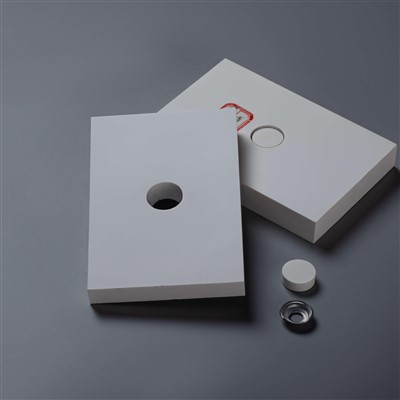

When selecting aluminum oxide ceramic lining, users need to choose according to the actual application environment requirements. Different alumina contents, sintering temperatures, and post-treatment processes can affect the performance indicators of lining bricks. It is recommended to have detailed communication with us during procurement to ensure that the selected products meet specific usage requirements.
Why choose us?
1. Support customization
We not only provide standard lining products. Our technical team can design targeted lining solutions based on your equipment drawings and actual working conditions, including material grade selection, thickness configuration, shape matching, and installation method recommendations. For areas with severe local wear, we will carry out targeted reinforcement design to avoid the problem of premature local damage to the lining.
2. Complete product form and level support
We have three mainstream material grades and over 2000 conventional size molds, covering flat tiles, curved bricks, tubular linings, and various shaped linings. We can provide matching products for both standard flat protection and irregular equipment lining. For products without traditional molds, we also have a quick mold opening mechanism that can complete mold opening and sample production within 15 days.
3. Reliable control of ceramic materials
The performance of the lining system depends on consistent material quality and manufacturing accuracy. We strictly control the preparation of raw materials, molding processes, and firing conditions to maintain stable physical properties. Our alumina ceramic lining is developed specifically for industries that require reliable protection to prevent continuous material wear.
4. Fast delivery
We have reserved a certain amount of regular size product inventory, and for small batch emergency repair orders, they can be delivered within 3-7 working days. For bulk customized orders, the production cycle is 15-30 days based on the order quantity. We provide detailed installation manuals and remote video guidance to ensure the quality of lining installation.
factory show

Product quality certification

FAQ
Q1: What is the difference between aluminum oxide ceramic lining and ordinary wear-resistant ceramic tiles?
A1: Ordinary wear-resistant ceramic tiles are mostly flat standard parts, mainly used for protecting flat equipment. Alumina ceramic lining is a broader system concept that includes forms such as flat bricks, curved bricks, and shaped parts, which can completely cover various equipment surfaces such as flat, cylindrical, and irregular shapes.
Q2: Can ceramic lining be cut on site during installation?
A2: Standard flat lining tiles can be cut on-site with professional diamond cutting blades to adapt to the edge position of the equipment. Curved bricks and irregular lining are usually customized in advance according to the equipment size, and it is not recommended to cut them on site to avoid damaging the product structure and affecting the use effect. It is recommended to provide accurate equipment dimensions before placing an order, and we will conduct targeted cutting design.
Q3: How long is the service life of the lining in actual use?
A3: The service life is related to the material grade, lining thickness, material abrasion resistance, and flow rate. Under normal coal and ash transportation conditions, the service life of a 10mm thick 92% alumina lining is 3-5 years; For severe ore erosion conditions, a 15mm thick 95% or ZTA lining can be used, with a service life of 5-8 years. We will evaluate the expected service life based on your specific working conditions and provide reasonable recommendations.
Q4: Can old equipment be fitted with ceramic lining?
A4: Yes. Most of the easily worn parts of old equipment can be equipped with alumina ceramic lining. We only need to know the size and current wear and tear of the equipment in order to design targeted renovation plans. The renovation construction is simple and can be completed during equipment shutdown maintenance, which can greatly extend the service life of old equipment and save the cost of replacing new equipment.
Q5: Will the ceramic lining fall off during use?
A5: Under normal installation and usage conditions, the ceramic lining will not come off. We use high-temperature resistant and high-strength special ceramic adhesives, which have a bonding strength much higher than the shear force generated during material transportation. For high impact working conditions, we can also use a dual fixing method of adhesive and welding to further improve durability. As long as the installation is strictly carried out in accordance with the construction specifications, the risk of detachment is extremely low.
Hot Tags: Aluminum Oxide Ceramic Lining, China, manufacturers, suppliers, factory, customized, buy, Alumina Ceramic Lining Rubber Backed Panel, Alumina Ceramic Mosaic Tiles, Alumina Ceramic Balls, Alumina Ceramic Pieces, Alumina Ceramic Lined, Alumina Ceramic Lining
Send Inquiry


