

Ceramic Rubber Lagging
Description
Technical Parameters
Product Introduction

The production process of wear-resistant ceramic composite adhesive sheet mainly includes material preparation, forming, sintering, processing and other steps. Select high-quality ceramic materials and adhesives, and mix them evenly in a certain proportion. Then, the mixed material is molded into the desired shape and size through a molding process. Next, sintering treatment is carried out to tightly bond the ceramic material and adhesive, forming a strong wear-resistant layer. Processing and surface treatment are carried out to achieve the required precision and smoothness of wear-resistant ceramic composite adhesive plates.
Ceramic rubber lagging is a square wear-resistant rubber lining plate made by vulcanizing special ceramic pieces embedded in special rubber, which is fixed on the inner corner steel plate of the equipment by welding or attachment, forming a strong and buffering wear-resistant layer. As a coal conveying and ash discharge system in thermal power plants, it is widely used in wear-resistant lining plates, silos, pipelines and other equipment in metallurgy and steel industries. This type of composite board is widely used in industries such as thermal power generation, smelting, mining, ports, ports, cement, chemical industry, steel, machinery, machinery, material conveying systems, etc. It has strong applicability and can effectively reduce the impact and wear on equipment. Products can be selected according to requirements.
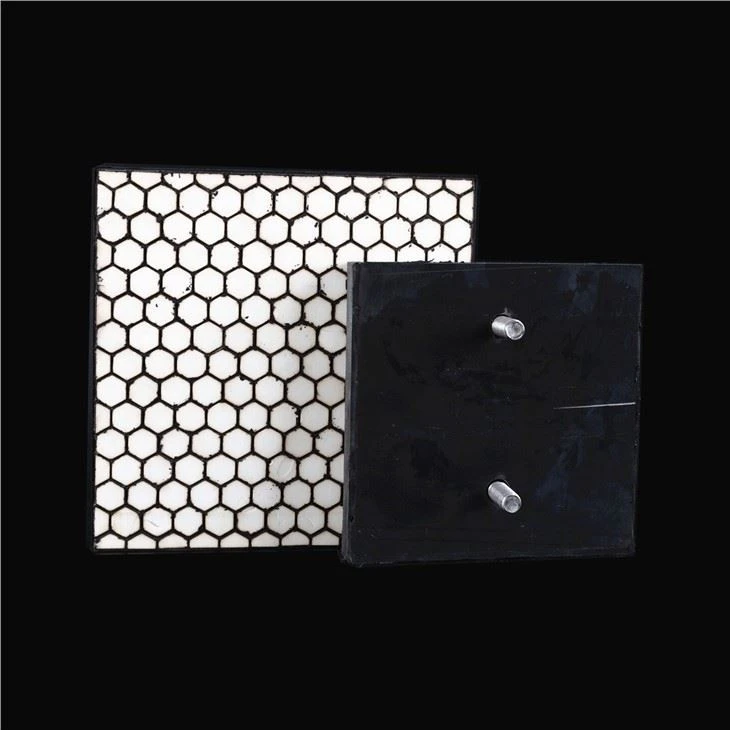
The characteristics of Ceramic rubber lagging
1. Wear resistance: Alumina corundum ceramic, with a hardness of HRA85 or above;
2. Impact resistance: The reinforced ceramic formula makes the ceramic less prone to breakage, and the unique spherical design and excellent buffer layer can resist the impact of large materials.
3.High temperature resistance: can work for a long time at 0 ℃ -250 ℃;
4. Acid and alkali resistance: The rubber adopts a new type of acid and alkali resistant rubber formula, which can resist weak acids and bases;
5. Anti hair loss: The ceramic rubber steel plate is vulcanized as a whole, and the adhesion is very strong; Each ceramic has through bolts, welded firmly through the bottom steel plate, providing dual safety.
6. Easy to install and replace: The lining is integrated, making it easy to replace and install, reducing after-sales service;
7. Reduce maintenance: Strong wear resistance can greatly reduce maintenance frequency, save costs and labor.
Product dimensions of Ceramic rubber lagging
| Size | Length(mm) | Width(mm) | Thickness(mm) | Shape |
| 10x10 | 10 | 10 | 1.5-10 | Mosaic/hexagonal |
| 11.55x11.55 | 11.55 | 11.55 | 3-12 | Mosaic/hexagonal |
| 12x12 | 12 | 12 | 3-12.7 | Mosaic/hexagonal |
| 17.5x17.5 | 17.5 | 17.5 | 4-10 | Mosaic/hexagonal |
| 20x20 | 20 | 20 | 5-15 | Mosaic/hexagonal |
| 25x25 | 25 | 25 | 5-15 | Mosaic/hexagonal |
| 50x25 | 50 | 25 | 5-10 | Plain Tile without hole |
| 50x50 | 50 | 50 | 5-15 | Plain Tile without hole |
| 100x100 | 100 | 100 | 6-15 | Plain Tile with or without hole |
| 150x100 | 150 | 100 | 6-100 | Plain Tile with or without hole |
| Remark: More than 2000 sizes and shapes are available up to customer requests |
Application
Ceramic rubber laggings are widely used in severely worn equipment such as coal mills, ball mills, crushers, and discharge equipment in industries such as metallurgy, mining, power, and building materials. They protect the worn parts inside the equipment, improve its service life and production efficiency.
Mining machinery
It can be used for wear-resistant lining plates, chutes, mill lining plates and other components of mining machinery to improve the wear resistance and service life of the equipment.
Power industry
It can be used for equipment such as coal mills, ash discharge pipes, dust collectors, etc. in the power industry, which can withstand high temperature, high pressure, and high wear environments.
Chemical industry
It can be used for wear-resistant linings, reaction vessels, storage tanks and other components of chemical equipment to resist the erosion and wear of chemical substances.
Metallurgical industry
It can be used for wear-resistant lining plates, conveyor belts, furnace bottoms and other components of metallurgical equipment to improve the wear resistance and service life of the equipment.
Photoes of Ceramic rubber lagging

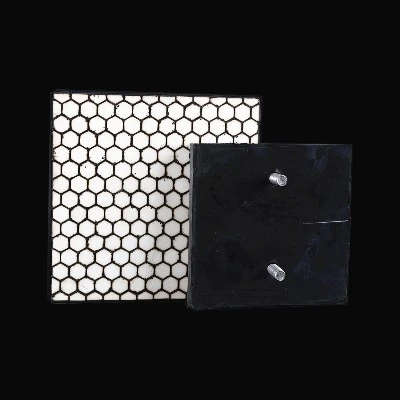
Construction Technology Description of Ceramic Rubber Laging
Adhesive type
The bottom layer is a CN layer, which is bonded to the surface of the equipment through adhesive.
Connection type
The bottom layer is a steel plate welded with connection bolts, which are connected and fixed to the surface of the equipment through bolts.
Ceramic surface form
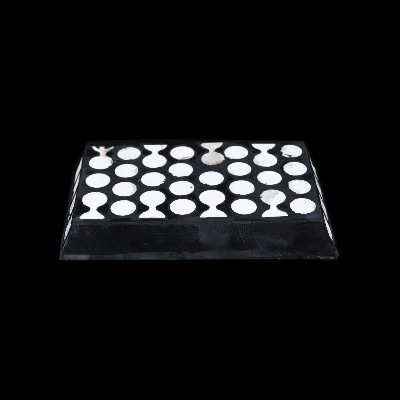
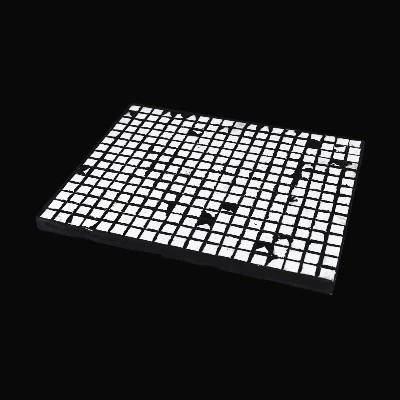
Divided into two types: flat and spherical, selected according to specific working conditions. The impact surface of the direct feeding point adopts a spherical shape, while the other wear surfaces adopt a flat shape.
Ceramic block specifications
can be customized according to customer needs, common specifications include 17.5 × 17.5 × 7mm, 25 × 25 × 7mm, 40 × 40 × 7mm, etc.
Thickness and Shape of Ceramic rubber lagging
Thickness specifications: Multiple thickness options are available, including 4mm, 6mm, 8mm, 10mm, 12mm, 16mm, 20mm, 25mm, 30mm, etc., to meet the needs of different working conditions.
Shape: including square, strip, trapezoid, circular arc, etc., can be pasted on various surfaces such as flat, circular arc, conical surface, etc., increasing the flexibility and versatility of use.
Hot Tags: Ceramic Rubber Lagging, China, manufacturers, suppliers, factory, customized, buy, The impact wear plates
Previous
Rubber CeramicSend Inquiry


