



99 Alumina Ceramic Tile
Description
Technical Parameters
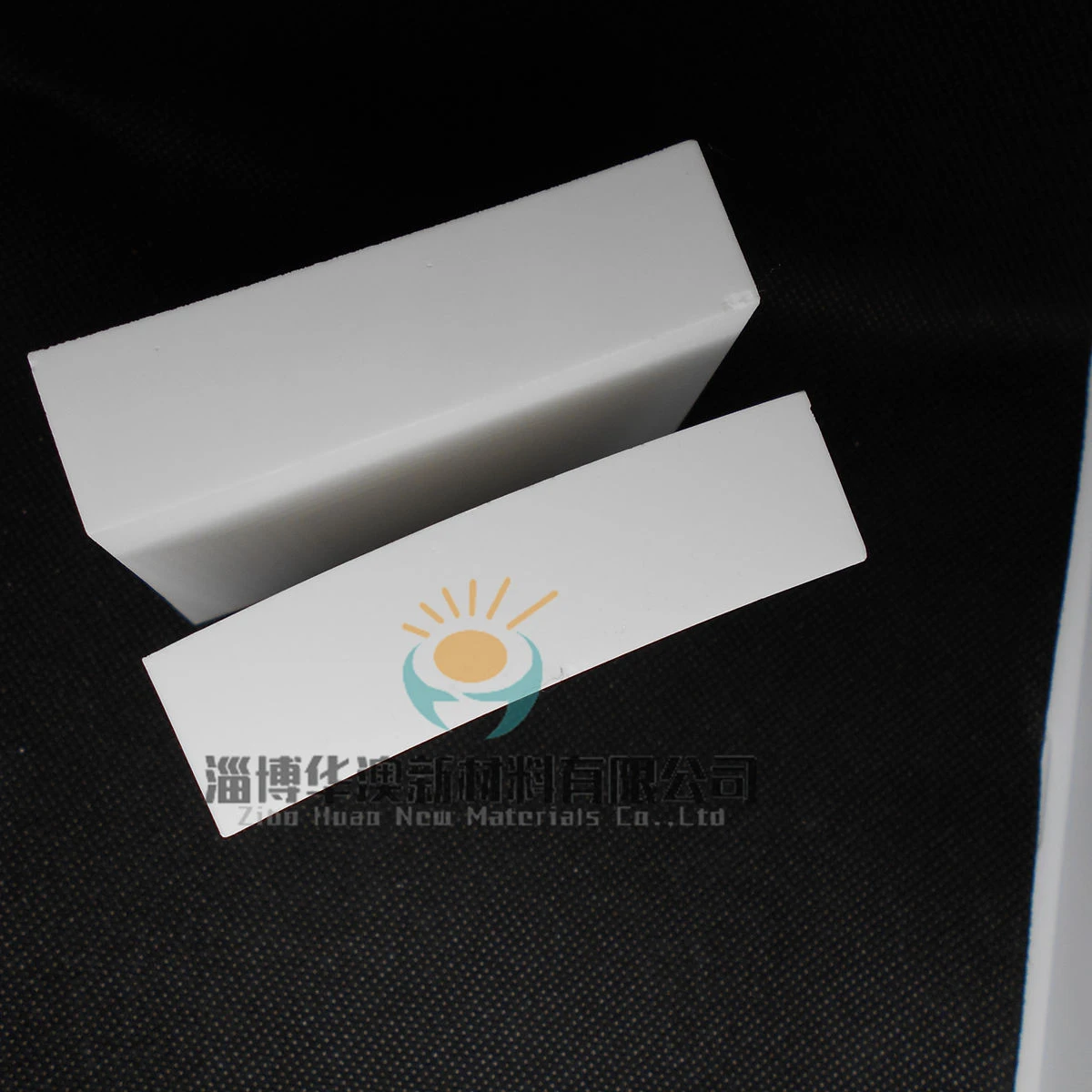
Products Description
Inside the ball mill, the grinding medium continuously impacts and slides on the inner wall. Steel or manganese steel lining will wear out under such wear, and introducing metal pollutants such as iron and manganese particles into the grinding material will damage electronic ceramics, battery materials, optical glass, or pharmaceutical intermediates. 99 alumina ceramic tiles replace metal liners with pure alumina surfaces that are harder and chemically inert than grinding media: no metal ions leach into the product, and any alumina wear particles are chemically compatible with most oxides and ceramic materials.
Unlike standard flat lining, this type of ceramic tile can be produced in different geometric shapes to accommodate equipment contours, including curved sections, pipes, cones, and other areas where traditional large panels are difficult to install. Ceramic tiles can be specified according to the size and installation requirements of specific projects, making them suitable for new equipment and maintenance work. It is typically considered for material handling systems and process equipment in industries such as mining, coal processing, power generation, cement, and metallurgy. Customers can provide drawings, measurements, or photos of the installation area to discuss suitable ceramic sizes, thicknesses, and configurations before production.
Advantages
1. High purity materials without metal pollution
The decisive advantage of 99 alumina ceramic tiles is the complete absence of metal ions in the grinding environment. Steel and manganese steel lining will continuously shed iron and manganese particles during wear, which will produce metal impurities and contaminate the grinding material. For electronic ceramic materials (MLCC, PZT, ferrite), lithium battery cathode materials (NCM, LFP, LCO), optical glass, pharmaceutical intermediates, and high-purity chemicals, even 10ppm of iron can cause color changes, changes in sintering behavior, decreased dielectric properties, or substandard purity specifications. 99 alumina tiles completely eliminate this source of pollution: the lining surface is pure alumina, and any wear particles entering the product are alumina - chemically compatible with most oxides and ceramic materials.
2. Wear resistance prolongs the life of the pad
In the ASTM G65 dry sand rubber wheel test, the wear volume is less than 0.15 cm ³. 99% of alumina tiles are 3.3 times higher than 92% alumina (0.50 cm ³), manganese steel (5-8 cm ³) is 30-50 times lower, and low carbon steel (8-12 cm ³) is 50-80 times lower. In ball mill services, the lining life of 99% alumina tiles is 5-10 years, while 92% alumina tiles are 1-3 years and manganese steel is 3-12 months. The longer lifespan reduces the frequency of lining replacement, lowers planned downtime costs, and minimizes the risk of catastrophic lining failures during production operations.
3. A dense structure helps to resist gradual surface loss
Industrial wear and tear is usually a slow process. A single particle may only remove a very small amount of material during each contact, but thousands or millions of contacts will ultimately reduce the wall thickness of the component. The dense alumina ceramic surface provides a hard barrier between the abrasive solid and the equipment substrate, helping to slow down this gradual material loss.
4. High density and high hardness wear-resistant materials
When the bulk density is ≥ 3.90 g/cm ³ and the Vickers hardness is ≥ 1700 HV, 99% of alumina tiles can resist the wear of the hardest industrial materials. High density means that the unit volume mass of each tile is larger, providing better structural stiffness and resistance to abrasive impact cracking. The fine-grained microstructure (2-5 μ m grains) provides a smooth surface, reduces friction between the lining and the ground material, improves fluidity, and reduces energy consumption.
Application
1. Electronic ceramic manufacturing
Manufacturers of multi-layer ceramic capacitors (MLCC), piezoelectric ceramics (PZT), ferrite materials, and dielectric ceramics require zero metal contamination during the grinding process. Even 10ppm of iron can alter the dielectric constant of MLCC materials or cause discoloration of PZT ceramics. 99 alumina ceramic tiles are the standard lining for ball mill processing of these high-purity ceramic powders. When used in conjunction with 99% alumina grinding balls, the entire grinding environment is alumina on top of alumina, ensuring that the only source of contamination is alumina itself - chemically the same as the main raw material in most ceramic formulations.
2. Lithium battery materials
The positive electrode materials (NCM, NCA, LFP, LCO) and negative electrode materials of lithium-ion batteries are processed in a ball mill during the manufacturing process. Iron pollution can lead to micro short circuits, shortened cycle life, and safety issues; The battery manufacturer stipulates that the total metal pollution should be less than 50ppm. 99% of alumina tiles eliminate iron and manganese contamination in the mill lining, and their extremely high wear resistance means that replacement frequency is not high, which is crucial in battery manufacturing where production continuity is paramount.
3. Refractory materials and advanced ceramics
Manufacturers of high alumina refractory materials, silicon carbide ceramics, boron nitride, and other advanced ceramics use 99% alumina tiles in their processing plants to avoid pollution that alters firing performance. For silicon carbide, iron can cause abnormal grain growth during the sintering process; For boron nitride, metal impurities can reduce thermal conductivity. 99% alumina tiles provide the required purity and wear resistance, and offer customized wedge-shaped profiles for special grinding machine geometries.
Product parameter
|
Property |
92% Al₂O₃ |
95% Al₂O₃ |
99% Al₂O₃ |
|---|---|---|---|
|
Al₂O₃ Content (%) |
≥92 |
≥95 |
≥99 |
|
SiO₂ Content (%) |
≤5.0 |
≤3.0 |
≤0.5 |
|
Na₂O Content (%) |
≤0.3 |
≤0.2 |
≤0.1 |
|
Fe₂O₃ Content (%) |
≤0.2 |
≤0.15 |
≤0.05 |
|
Total Impurities (%) |
≤8.0 |
≤5.0 |
≤1.0 |
|
Bulk Density (g/cm³) |
≥3.60 |
≥3.65 |
≥3.90 |
|
Apparent Porosity (%) |
≤0.1 |
≤0.05 |
≤0.5 |
|
Water Absorption (%) |
≤0.01 |
≤0.01 |
≤0.1 |
|
Mohs Hardness |
9 |
9 |
9 |
|
Rockwell Hardness (HRA) |
≥82 |
≥88 |
≥90 |
|
Vickers Hardness (HV) |
≥1200 |
≥1400 |
≥1700 |
|
Flexural Strength (MPa) |
≥220 |
≥280 |
≥340 |
|
Compressive Strength (MPa) |
≥1800 |
≥2000 |
≥2500 |
Geometric shape and mill lining design
Standard lining shape
Ball mill liners typically use a combination of multiple types of ceramic tiles:
Cylindrical cross-section (main body): Wedge shaped tiles are installed in a staggered manner, with each row offset by half the length of the tiles relative to the upper and lower rows. This will create interlocking vertical seams to resist the rotational shear force of the mill.
End cap (head): Rectangular tiles or custom shaped tiles cut to accommodate the curved transition from cylinder to head. Some factories use a combination of rectangular and wedge-shaped tiles in the head area.
Inlet and outlet: Customize cut tiles or special casting shapes to align the most complex geometric shapes and typically the most worn transition openings.
Installation method
There are usually two bonding methods for 99% alumina mill liners:
1. High alumina cement bonding: a traditional method for lining ball mills. A high alumina refractory cement (Al ₂ O ∝ ≥ 70%) is mixed with water to achieve a mortar consistency, and coated with a thickness of 3-5mm on the mill shell and the back of the tiles, then pressed into place. Cement can be cured at room temperature for 24-48 hours, and then heat cured at 100-200 ° C to obtain additional strength. This method is more suitable for high-temperature mills (>120 ° C) and mills that process grinding materials, as cement itself provides additional wear resistance.
2. Epoxy adhesive bonding: Apply two parts of epoxy adhesive (shear strength ≥ 15MPa) with a thickness of 1-2mm on the back of the ceramic tile and the substrate. The tiles are pressed into place and cured at room temperature for 24-48 hours. This method provides stronger bonding strength than cement and is the preferred choice for low-temperature mills (<120 ° C) and applications that require quick installation. Epoxy resin bonding also provides a damping layer, which can reduce the cracking of tiles due to impact.
Compay Information
quality assurance
Each batch of 99% alumina tiles undergoes strict quality control protocols:
1. Raw material inspection: Each batch of calcined alumina powder is tested for chemical composition using XRF (Al ₂ O3, SiO ₂, Na ₂ O, Fe ₂ O3), CaO,MgO), Laser diffraction of particle size distribution (D50, D90) and LOI (loss on ignition) of volatile components. Only powders that meet the 99% purity specification can be put into production.
2. Process monitoring: Check the weight and size of each batch of pressed green bodies. The temperature of the sintering kiln is continuously recorded by multiple thermocouples, and the sintering curves (heating rate, peak temperature, residence time, cooling rate) of each batch are archived.
3. Finished product testing:
Bulk density: Archimedes method, 5 samples per batch; Acceptance ≥ 3.90 g/cm ³.
Water absorption rate: Boiling water method according to GB/T 2997 or ASTM C20; Acceptance rate ≤ 0.1%.
Apparent porosity: mercury intrusion porosimetry or boiling method; Acceptance rate ≤ 0.5%.
Bending strength: Three point bending test of 10 steel bars per batch (according to ASTM C1161); Acceptance pressure ≥ 340 MPa.
Compressive strength: 10 cubes are tested per batch; Acceptance pressure ≥ 2500 MPa.
Fracture toughness: indentation method (IF) or single side notched beam (SENB); Acceptance ≥ 4.2 MPa · m ^ (1/2).
Wear amount: ASTM G65 dry sand rubber wheel test; Acceptance is less than 0.15 cubic centimeters.
Chemical composition: XRF analysis of fired samples; Acceptance A1 ₂ O ∝ ≥ 99%, total impurities ≤ 1%.
Dimensional inspection: 100% measurement of the length, width, thickness, and wedge angle of ceramic tiles; Acceptance within the specified tolerance range.
Visual inspection: 100% inspection of tiles for cracks, gaps, warping, and discoloration.
4. Pre shipment documents: Each shipment includes a batch test report, certificate of origin, Material Safety Data Sheet (MSDS), and packaging photos. We can arrange third-party inspections (SGS, BV, Intertek, T Ü V) according to customer requirements.
Why choose us?
We are a manufacturer that has obtained ISO 9001:2015 quality management certification and supplies to over 40 countries in Asia, Europe, North America, South America, and the Middle East. 99% standard rectangle and wedge sizes are in stock and can be shipped within 7-10 days; Custom sizes, custom wedge angles, and 99.5% ultra-high purity grades are typically shipped within 25-35 days. Packaging options include 25kg cartons on wooden pallets (conforming to ISPM-15 standard), wooden boxes with foam lining (for thick tiles) and customer specified packaging. For large-scale mill lining projects, we can provide pre numbered tile packages corresponding to specific mill sections to simplify on-site installation.
FAQ
Q1: Why use wedge-shaped tiles instead of rectangular tiles in ball mills?
A1: The ball mill has a cylindrical inner wall. Rectangular tiles installed on curved surfaces leave wedge-shaped gaps at the edges, allowing grinding media and materials to penetrate behind the tiles, leading to loosening, accelerated wear, and eventual displacement. Wedge shaped (trapezoidal) ceramic tiles have a wider outer surface and a narrower inner surface, matching the curvature of the grinder, so adjacent tiles are flush and seamless. The standard 5mm width difference is suitable for rolling mills with diameters of 1.5-3.0m; Customized wedge angles are suitable for any milling radius. When installed in a staggered pattern, wedge-shaped tiles form a continuous, interlocking, seamless cylindrical lining.
Q2: What is the typical service life of 99 alumina ceramic tiles in a ball mill?
A2: The service life depends on the material's wear resistance, grinding speed, grinding medium type, and tile thickness. General guidance: 50-70mm ceramic tiles for electronic ceramic raw materials (feldspar, clay, quartz) -5-8 years; 40-60mm ceramic tiles for lithium battery positive electrode materials (NCM, LFP) -4-6 years; Cement raw materials and clinker for 60-100mm ceramic tiles -3-5 years; Use high wear-resistant materials (zircon sand, silicon carbide, bauxite) with 50-70mm ceramic tiles -2-4 years. In the same application, 99% of tiles are typically 2-3 times more durable than 92% of tiles due to their higher density and hardness.
Q3: What is the minimum order quantity for customized sizes or wedge angles?
A3: For standard rectangle and wedge sizes of 99% grade (150 × 50 × 40-100mm, 160 × 50 × 40% -100mm), the minimum order quantity is 500kg. For custom sizes, custom wedge angles, or 99.5% ultra-high purity grades, the minimum order quantity is usually 1000-2000kg due to mold settings and minimum kiln load.
Q4: How are 99% alumina tiles packaged during international transportation?
A4: Standard packaging: Ceramic tiles are stacked in corrugated cardboard boxes, separated by partitions between each layer to prevent edge breakage. The cardboard boxes are placed on wooden pallets and tied with steel straps. For thick and heavy tiles (>70mm) or long-distance sea transportation, use wooden boxes with foam or cardboard lining. The weight of the pallet is usually 800-1200kg. Customized packaging can be provided upon request.
Tailored 99% alumina lining solution for your factory!
Hot Tags: 99 Alumina Ceramic Tile, China, manufacturers, suppliers, factory, customized, buy, Alumina Ceramic Lining Rubber Backed Panel, Alumina Ceramic Cyliner, Ceramic Hexagonal Tiles, Alumina Ceramic Tube, Alumina Ceramic Mosaic Tiles, Alumina Ceramic Lined
Send Inquiry


