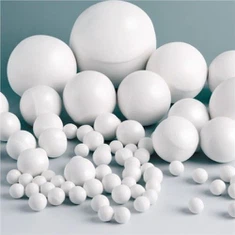


Factory Wholesale Wear Resistant Customized High Purity Alumina Ceramic Tiles

Factory Wholesale Wear Resistant Customized High Purity Alumina Ceramic Tiles

Factory Wholesale Wear Resistant Customized High Purity Alumina Ceramic Tiles

Factory Wholesale Wear Resistant Customized High Purity Alumina Ceramic Tiles
Wear Resistant High Purity Alumina Ceramic Tile
Description
Technical Parameters

Products Description
When abrasive solids slide or roll on steel surfaces, the main failure mode is micro cutting: sharp particles plow tiny grooves in the metal, gradually thinning the wall until perforation occurs. In pipelines and bends used to transport mud, turbulence and Coriolis effect accelerate this process, and Coriolis effect concentrates wear on the outer radius of the bend. Steel pipes can last for several months in this service; Aluminum oxide ceramic lining pipes can usually be used for 5-10 years. Wear resistant high purity alumina ceramic tiles are the core component of this lining system - a precision sintered alumina element directly bonded to the substrate, providing a hard, smooth, chemically inert surface for flowing materials.
The manufacturing process starts with the mixing of calcined α - alumina powder (D50 0.8-2.0 μ m, Fe ₂ O ≮ ≤ 0.03%, Na ₂ O ≤ 0.3%) with specific grade of sintering aids and organic adhesives, and then spray drying to form free flowing particles. Forming depends on the size of the tiles: large flat tiles use a uniaxial dry pressing of 80-150MPa; Small mosaic chips are formed by multi cavity pressing or rolling; Arc and irregular geometric shapes are processed using isostatic pressing or green machining. After drying, the tiles are sintered at 1550-1700 ° C for 24-48 hours. During the firing process, the transient liquid phase wets the grain boundaries of corundum and promotes densification, resulting in a final density of 3.60-3.95 g/cm ³ and a porosity of less than 0.1%. The resulting microstructure - grains (3-10 μ m) in the smallest glass matrix of interlocking α - Al ₂ O3- has a Mohs hardness of 9, a bending strength of 220-340 MPa, and a fracture toughness of 3.6-4.5 MPa · m ^ (1/2). Then assemble the mosaic product onto standard sized fiberglass mesh or paper backing for quick on-site installation.
Advantages
1. The wear resistance is 10 to 20 times that of steel
In the ASTM G65 dry sand test, 92% of alumina showed a wear volume of less than 0.50 cm ³, while low carbon steel had a wear volume of 5-10 cm ³ and hardened wear-resistant steel had a wear volume of 2-4 cm ³. In on-site service, the lifespan of alumina tile lining in slurry pipelines is usually 5-10 times that of unlined steel, and its lifespan in high-speed dust pipelines is usually 10-20 times longer. The extension of this service interval reduces the frequency of planned downtime and lowers the total annual cost of ownership.
2. Full ceramic structure suitable for high temperature environments
Due to the fact that wear resistant high purity alumina ceramic tiles do not contain rubber, polymers, or organic components, they can withstand continuous operating temperatures of up to 1500 ° C (92/95%) or 1600 ° C (99%). This makes them suitable for hot end applications: clinker cooler chutes, boiler ash hoppers, furnace feeding systems, hot gas pipelines, and kiln inlet seals. The only temperature limiting component is the adhesive - epoxy resin at 120-200 ° C and inorganic phosphate adhesive at 800 ° C.
3. Smooth surface reduces flow resistance and accumulation
The surface roughness (Ra) of sintered alumina during firing is 1.6-3.2 μ m, which can be polished to below 0.8 μ m. This smoothness reduces the friction between the lining and the conveying material, lowers the pressure drop in pneumatic conveying, and reduces the tendency for viscous materials (wet clay, hot cement, gypsum) to adhere and accumulate. In mud pipelines, smooth surfaces minimize erosion caused by wall boundary layer turbulence.
4. Chemical inertness in acidic, alkaline, and solvent environments
Aluminum oxide can resist most inorganic acids (except hot concentrated phosphoric acid and hydrofluoric acid), bases, salts, and organic solvents below 100 ° C. This makes ceramic tiles suitable for chemical processing, fertilizer production, desulfurization systems, and salt treatment, during which steel is simultaneously subjected to wear and corrosion - a synergistic degradation that accelerates metal loss far beyond any one mechanism. 99% of grades have the highest chemical resistance due to the minimal glass phase.
Applications
1. Pipeline wear protection
The pipeline transporting abrasive powder or granular materials will gradually lose wall thickness due to continuous particle contact. Wear resistant high purity alumina ceramic tiles can be installed along high wear areas to separate transported materials from steel pipes. For straight pipes, if the internal geometric shape requires a tighter fit, curved parts can also be considered.
2. Elbows and directional sections
Bent pipes usually wear out more severely than straight pipe sections because the material can change direction and impact the wall. Therefore, the outer or inner radius may require additional protection. Ceramic lining can be arranged according to actual wear patterns, rather than uniformly applying the same thickness throughout the entire pipeline.
3. Protection of hydrocyclones
Hydrocyclones process mixtures at relatively high flow rates, and abrasive solids can continuously contact the inner surface. Local wear will ultimately affect the geometric shape and operational stability of the equipment. Ceramic lining provides a protective inner surface in areas exposed to concentrated particle movement.
4. Hopper and storage equipment
Bulk materials may remain in the hopper for a period of time before unloading. Loading, sliding, and unloading can cause different forms of wear within the same container. Ceramic tiles can be selectively used on surfaces with the greatest material movement, helping to protect the underlying steel structure.
5. Transfer chute
Conveyor chutes are common wear points as materials can change direction or fall from one conveyor onto another. The impact zone may withstand loads that are significantly different from the surrounding surfaces. Therefore, ceramic lining is usually concentrated around the receiving area, transition zone, and material trajectory, rather than being distributed without considering the actual flow path.
Technical Specifications
|
Item/Product |
HA 92 |
HA95 |
ZTA |
|
Al2O3(%) |
92±0.5 |
95±0.5 |
76±0.5 |
|
ZrO2(%) |
|||
|
Bending Strendth(Mpa) |
>220 |
>280 |
>400 |
|
(Mpam1/2)Fracture Toughness |
>3.60 |
>3.90 |
>4.50 |
|
Rockwell Hardness (HPV) |
>82 |
>88 |
>90 |
|
Wear Volume(cm³) |
<0.50 |
<0.30 |
<0.15 |
Dimensional Tolerances
| Parameter | Tolerance |
| Length / Width (≤150 mm) | ±0.5 mm |
| Thickness (≤10 mm) | ±0.3 mm |
| Thickness (10–30 mm) | ±0.5 mm |
| Flatness (per 100 mm) | ≤0.3 mm |
| Arc radius | ±1.0 mm |
| Mosaic sheet joint gap | ≤0.5 mm |
Product Format and Selection Guide
Square flat ceramic tiles
The main format for large, flat, or flat surfaces. The standard sizes include 100 x 100, 120 x 80, 125 x 75, 150 x 100, and 150 x 50 millimeters, with a thickness of 6-50 millimeters. Thin ceramic tiles (6-10mm) are suitable for low wear and tear large-area applications (dust ducts, cylinder walls); Medium for chutes, hoppers, and cyclone separators (12-20mm); Thick (25-50mm), used for high wear feeding points and impact pads. Install with staggered joints such as brick masonry to avoid continuous wear and tear.
Hexagonal ceramic tiles
The hexagonal geometric shape provides six interlocking edges for each tile, creating a more stable lining than a square that can resist the displacement of individual tiles. Especially suitable for curved surfaces and vibration areas, as the interlocking mode distributes shear forces across multiple joints. Standard hexagonal side 10-25mm, supplied with 150 × 150mm mesh panels.
Why choose us?
When you specify our Shandong Zibo factory's wear resistant high purity alumina ceramic tiles, you will collaborate with a manufacturer to control the entire chain from powder calcination to pressing, sintering, machining, and mosaic assembly. This vertical integration ensures consistent batch quality, competitive factory direct pricing, and the technical capability to produce customized geometric shapes based on drawings within 20-30 days.
Our engineering team provides lining design support: we analyze your equipment drawings, operating conditions (materials, particle size, speed, temperature, impact), and failure modes, and then recommend the best tile format, grade, thickness, and adhesive. For pipeline projects, we provide pre lined pipe sections manufactured in the workshop, eliminating on-site installation risks.
We conduct ISO 9001:2015 certification and statistical process control for all key parameters. Standard size/grade inventory, 7-10 days for shipping; Customized orders take 20-30 days. We export to more than 50 countries, providing comprehensive logistics support, carton packaging on standard pallets, and wooden cases, foam lining or customer specified packaging options.
FAQ
Q1: Can you produce tiles based on our drawings?
A1: Yes. We accept PDF, DWG, DXF, or STEP formats and can customize curved tiles, trapezoids, interlocking contours, and irregular geometric shapes. For first-time customized orders, we provide drawing confirmation and may produce prototypes for approval before full-scale production. The delivery cycle is usually 20 to 30 days.
Q2: How to choose between 92%, 95%, and 99% alumina?
A2: For general abrasive applications (mining mud, coal powder, cement raw materials), 92% has the best cost-effectiveness. For materials with high wear resistance (hard rock, zircon, silicon carbide) or low pollution requirements (pigments, ceramics, batteries), choose 95%. For ultra-high purity processes that require consideration of trace glass phase leaching (optical glass, pharmaceuticals, specialty chemicals, electronic ceramics), 99% is chosen. Our engineers can provide suggestions based on your material analysis.
Q3: What adhesive should I use and do you provide it?
A3: We provide compatible two-part epoxy resin for bonding ceramics and metals (shear force ≥ 15 MPa, temperature up to 120 ° C standard or 200 ° C high temperature). For temperatures above 200 ° C, we recommend using inorganic phosphate binders. Each order comes with detailed mixing and application instructions.
Q4: Can ceramic tiles be installed on existing equipment without disassembly?
A4: Yes. Chutes, hoppers, and large pipelines are usually installed on-site. The equipment must be stopped from use, cleaned, sandblasted, and then the tiles must be bonded in place. For pipelines, replacing them with pre lined pipe sections from our factory is usually more cost-effective, but for large-diameter pipelines (≥ 500 millimeters) that personnel can access, on-site lining can be performed.
Hot Tags: Wear Resistant High Purity Alumina Ceramic Tile, China, manufacturers, suppliers, factory, customized, buy, Alumina Ceramic Lining Rubber Backed Panel, Alumina Ceramic Pieces, Alumina Ceramic Tube, Alumina Ceramic Lined, Alumina Ceramic Lining, Ceramic Hexagonal Tiles
Previous
Alumina Ceramic Hexagonal TilesSend Inquiry
You Might Also Like