


Al2O3 Alumina Ceramic Tile in Rubber Wear Liner Plate
Description
Technical Parameters
Products Description
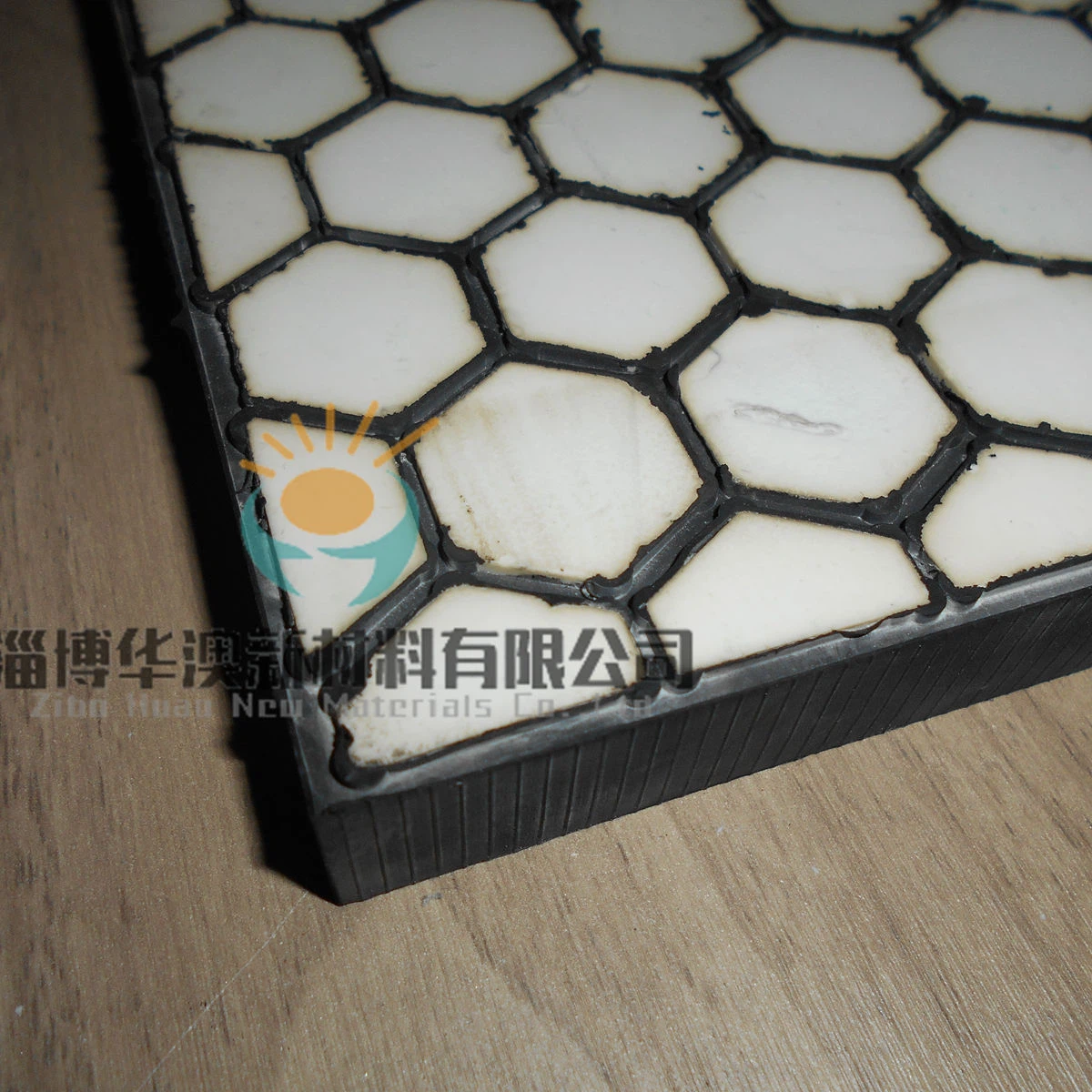
When abrasive solids fall from high places or slide over steel surfaces, two types of damage mechanisms occur simultaneously: micro cutting by sharp particles corrodes the surface, and repeated impacts generate fatigue cracks that propagate through the substrate. A single material cannot effectively solve these two problems. Steel is very hard, but it wears out quickly under abrasives rich in silicon dioxide; Pure alumina is resistant to cutting, but it will fracture under concentrated impact. The Al2O3 alumina ceramic tiles in the rubber wear-resistant lining board solve this trade-off by embedding precision sintered alumina ceramic tiles into a natural rubber matrix during hot vulcanization, and then bonding the components to steel plates or using them as flexible double-layer panels.
The aluminum oxide options for HUAO Al2O3 alumina ceramic tile in the rubber wear liner plate include 92%, 95%, and 99% grades. The panel structure can also be adjusted according to different project requirements. The existing product line includes multiple panel sizes, while ceramic parts come in various sizes and thicknesses to choose from. Where a rigid structural foundation is required, steel backing can be specified, and rubber thickness can be selected based on expected impact conditions. For specific device designs, flat and spherical configurations, as well as bolt and other customized forms, can be considered.
Advantage
1. Treat impact and wear as two independent issues
In heavy material handling equipment, wear is rarely caused by a single mechanism. The falling block may first hit the lining and then slide over its surface. Ceramic working surfaces are suitable for grinding contacts, while elastic backing helps to cope with mechanical impacts. This makes the composite structure more suitable for transfer points and other areas where ordinary rigid liners may experience excessive stress.
2. The rubber layer helps protect the equipment structure
The installation of ceramic to steel directly can transfer a considerable amount of impact energy to the supporting structure. An appropriately selected elastic layer serves as an intermediate pad between the ceramic and steel base. This can reduce the severity of repeated impacts transmitted to the equipment casing, especially for chutes, hoppers, and loading areas.
3. Better control of vibration and operational noise
When a large amount of ore, aggregate, or other bulk materials repeatedly impact the metal surface, significant mechanical noise is generated. The elastic backing absorbs some mechanical energy instead of directly transferring all mechanical energy to the supporting structure. In appropriate installation, Al2O3 alumina ceramic tile in the rubber wear liner plates help create a quieter and more controllable working environment.
4. A smoother ceramic surface can improve material movement
The exposed ceramic surface provides a relatively smooth contact area for the transported material. In a properly designed transmission system, this can help materials move on the lining, reduce surface resistance, and decrease the tendency for fine materials to adhere to worn or rough metal surfaces. The result is a lining solution that can protect equipment without unnecessarily impeding material flow.
Application
1. Mining transfer chute
The ore leaving the crusher, sieve or conveyor will collide with the surface of the chute at a relatively fast speed. The combination of ceramic protection and elastic backing is useful in these locations as the lining must handle particle impact and subsequent sliding. The configuration can be selected based on the size of the ore, the height of the drop, and the expected direction of material flow.
2. Coal transportation system
Coal conveyors and transfer stations typically contain points where materials change direction or fall between conveyor levels. These locations may experience repeated impacts from large particles, followed by sustained sliding wear. Rubber backed ceramic plates can be installed in selected high load areas, while other parts use simpler lining arrangements.
3. Cement and clinker transportation
Clinker and other bulk materials related to cement may have high grindability. The conveying chute, hopper, and discharge section are exposed to continuous material movement and impact. Al2O3 alumina tiles can provide a protective working surface in rubber wear-resistant lining, while backing helps to adapt to mechanical impacts generated during material loading.
4. Aggregate and sand processing
Crushed stones, gravel, and sand can quickly wear down unprotected steel surfaces, especially when materials fall from one processing stage to another. Ceramic panels are useful at the impact point, while rubber layers provide cushioning between the working surface and the equipment body.
Technical Data
|
Panel Size |
300×300, 200×200, 225×225, 250×250, 400×400, 425×425, 500×500, 600×600 |
|
Ceramic Size |
Ceramic tiles are available from 10×10mm to 100×150mm; thickness of ceramic tile can be from 1.5mm to 1.5mm |
|
Backing Plate |
Steel plate with thickness ranging from 3mm to 10mm (optional) |
|
Rubber Thickness |
Depends upon the impact stress expected or customer requirement. |
|
Remarks |
Metal+Rubber+Ceramic/Rubber+Ceramic Plain surface or Spherical surface. Studs also aviilable upon request custom shapes can be made. |
Installation and Maintenance Guide
Proper installation is crucial for achieving the potential service life of Al2O3 alumina tiles in rubber wear-resistant lining plates. If the substrate is not properly prepared or the adhesive is not used properly, even the highest quality panels will perform poorly. The following guidelines reflect the on-site verification procedures of hundreds of facilities worldwide.
Surface Treatment
Whether it is bonding or welding, proper surface treatment is the most important factor for long-term bonding. For adhesive installation:
1. Sandblasting the steel substrate to a cleanliness of SA 2.5, with an angular profile of 50-75 μ m.
2. Use solvents to remove all dust, oil, and grease.
3. Apply a compatible primer within 4 hours after sandblasting (before forming flash rust).
For bolt welding installation:
1. Mark the position of the bolts according to the panel layout icon (usually 4-6 bolts per 500 × 500 mm panel).
2. Use a certified stud welding gun and weld the studs with ceramic rings.
3. Check each weld by bending the stud 15 ° - any malfunction requires re welding.
Adhesive Procedure
1. Apply epoxy resin or polyurethane adhesive composed of two parts on the back of the panel and the substrate.
2. Place the panel within the opening time of the adhesive (usually 10-20 minutes at 20 ° C).
3. Apply uniform pressure using fixtures, weights, or vacuum bags. Minimum contact pressure: 0.05MPa.
4. Before exposure to use, it should be fully cured: at 20 ° C for 24 hours, or as specified by the adhesive manufacturer.
5. For high temperature environments, use thermosetting epoxy resin and cure for 2-4 hours at 60-80 ° C.
Maintenance and inspection
Preliminary inspection: After the first 72 hours of use, check for any panel displacement, edge warping, or tile cracking.
Routine inspection: Check the high wear areas of ceramic thickness loss (impact points, material flow deflection) every 3-6 months. Depth gauges or ultrasonic thickness gauges can quantify the remaining lifespan.
Replacement: When the ceramic thickness decreases to 30% of the original thickness, or when the tiles are missing in clusters exceeding 100 square centimeters, please replace the panel.
Emergency repair: For localized damage, ceramic filled epoxy putty can provide temporary repairs lasting weeks to months for planned replacement during the next scheduled downtime.
Why choose us?
1. Manufacturers and integrated production
We are not a trading company. We control the entire production chain from alumina powder calcination and tile pressing to rubber formulation and hot vulcanization bonding at our factory in Zibo, Shandong. This vertical integration means stricter quality control, shorter delivery cycles, and direct technical communication between your engineering team and our production engineers.
2. Practical combination of ceramics and rubber
The ceramic surface provides a hard contact surface for the grinding material, while the rubber layer acts as a buffer layer between the ceramic and the steel substrate. This combination gives the Al2O3 alumina ceramic tile in the rubber wear liner plate a different operating behavior from the rigid tiles directly installed on the equipment.
3. More suitable for impact and vibration areas
Transfer points, feeding troughs, and hopper bottoms may experience repeated impacts and equipment vibrations. Elastic backing helps to adapt to mechanical motion and absorb some impacts, making the composite structure particularly suitable for areas where rigid lining may be prone to cracking or loosening.
4. Flexible project installation and configuration
The size of the equipment varies depending on the factory. We can discuss ceramic dimensions, rubber backing thickness, panel dimensions, and fixing requirements based on the customer's application. This allows the lining layout to be planned before production, rather than relying entirely on cutting and adjustment at the installation site.
5. Suggestions based on actual wear and tear conditions
We do not recommend selecting lining solely based on device name. The material density, particle size, droplet height, impact direction, conveying speed, temperature, and existing substrate conditions all affect the results. When discussing suitable product configurations, these details will be taken into account.
Company Info.
Zibo Huao New Materials Co.,Ltd is located in Shandong Zibo, it is a professional company for R&D Design, manufacture and sale Alumina Particular kind of Ceramic Products. Huao always adhere to the principle of quility first, customers first and reputation first, their products are widely used in ceramic, mining,petroleum, chemical industry, electric power, papermaking, cement,aerospace, military industry and other fields. The markets covered Europe and the United states, the Middle East, Sountheast Aisa,Japan, South Korea and other regions and countries. Warmly welcome friends from all over the world to join hands with Huao and thank you for your support!
FAQ
Q1: How to ensure the quality of the product?
A1: Use tabular alumina as an example. Before shipping, we will take pictures, take samples, and send them to the laboratory for physical testing. It is sent to third -party institutions for chemical testing to ensure product quality.
Q2: What packaging?
A2: Depending on the size of the cargo, the packaging is different. There are cartons, wooden boxes, and ton packages. According to customer needs or special requirements of the goods, choose the appropriate packaging.
Q3: How long is the delivery period?
A3: Depending on the product, the delivery period is different. The customized products are generally about one month, and the conventional products are about 7-10 days.
Send Inquiry


