



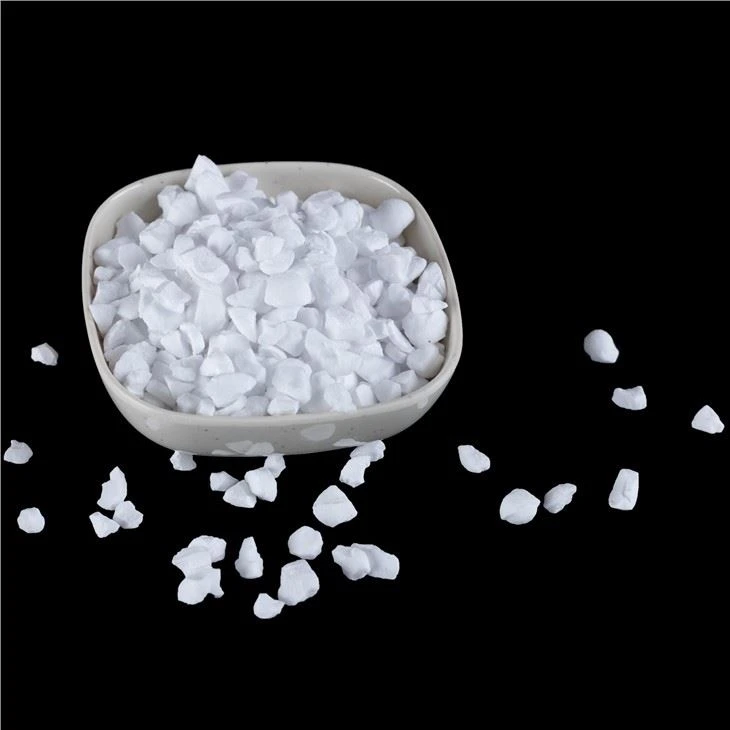
99.2% China White Tabular Alumina
Description
Technical Parameters

Products Description
In high-temperature industries, refractory materials need to maintain their structure and properties even during repeated heating, thermal cycling, and chemical reactions. 99.2% China white tabular alumina is produced from high-purity alumina through advanced sintering technology. Its crystal structure is well-developed, with low impurity content, and it is widely used in the production of advanced refractory materials that require stable performance under extreme thermal conditions.
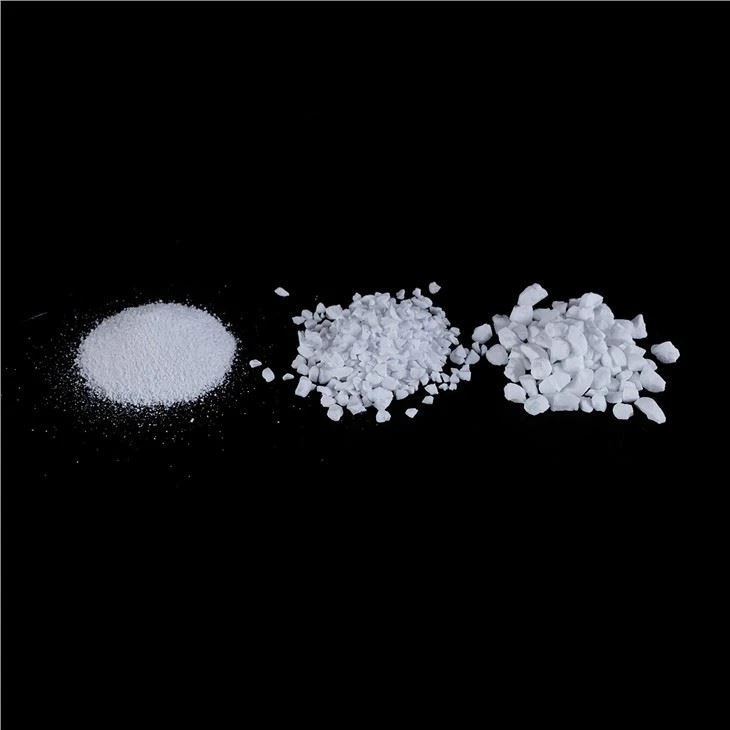
Our product has a purity level of 99.2% and is a cost-effective mainstream product in industrial refractory applications. By optimizing powder pretreatment and precise sintering curve control, complete crystal development and uniform grain size were achieved, and the thermal conductivity change rate was controlled at an extremely low level. It can be processed into particles and fine powders of various sizes, suitable for different refractory material formulation systems, and also applicable to application scenarios such as wear-resistant filling and ceramic raw materials.
High temperature sintering and crystal growth regulation
Each batch of 99.2% China white tabular alumina undergoes strict high-temperature sintering control in an ultra long tunnel kiln, which is the core process for forming its unique plate-like crystal structure.
The sintering process adopts a rapid heating high temperature insulation controlled cooling curve design. The temperature rapidly rises to 1800-1850 ℃ and remains near the melting point of alumina for a specific period of time. At this temperature condition, the alumina grains undergo sufficient recrystallization, grow laterally to form sheet-like flat crystals, and interlock with each other to form a stable crystal skeleton. At the same time, the originally open pores gradually wrap around the crystal structure, forming closed spherical pores.
The precise control of sintering temperature and holding time is the key to product quality. Insufficient temperature can lead to incomplete crystal development, high porosity, and poor thermal shock resistance; Excessive temperature and prolonged insulation time can lead to abnormal grain growth, increased brittleness, and reduced impact resistance of the product. Our production line is equipped with a multi-point real-time temperature monitoring system, and the temperature difference inside the kiln is controlled within ± 15 ℃ to ensure consistent sintering quality of products at different positions.
After sintering, the finished clinker enters the post-processing process. By jaw crushing, roller grinding, and multi-stage screening, products of different particle size grades are processed. The entire process is equipped with multiple magnetic iron removal stages to avoid introducing iron impurities during the crushing process. Finally, conduct manual visual inspection and performance sampling to completely eliminate products that do not meet the standards.
Advantages
1. High crystal stability
The unique manufacturing process of tabular alumina creates a fully developed alpha alumina crystal structure with low porosity and excellent volume stability. This structure helps refractory materials maintain their original shape through repeated heating and cooling cycles, reducing the risks of cracking, deformation, and premature failure in high-temperature equipment.
2. Thermal shock resistance
Industrial furnaces often experience rapid temperature changes during the production process, which puts enormous pressure on refractory linings. The controlled microstructure of 99.2% China white tabular alumina provides excellent thermal shock resistance, enabling refractory products to better withstand temperature fluctuations while maintaining mechanical integrity.
3. Low water absorption and reduced reactivity
Compared with many traditional alumina materials, tabular alumina has a dense structure and lower apparent porosity. This function can reduce the penetration of molten materials and corrosive substances into the refractory lining, helping to improve resistance to chemical corrosion in harsh operating environments.
4. Improve mechanical strength at high temperatures
Many refractory materials lose their strength when exposed to extreme high temperatures. Plate shaped alumina maintains excellent load-bearing capacity at high temperatures, making it suitable for applications where refractory components must withstand mechanical stress during long-term furnace operation.
5. Better corrosion resistance to molten materials
In industries such as steel, casting, and non-ferrous metal processing, refractory materials are often exposed to molten metal, slag, and corrosive chemicals. The dense structure of flake alumina helps reduce infiltration and improve the service life of refractory products.
Products Description
1. Steel and metallurgical industry
Steel production involves extreme temperatures, contact with molten metal, and continuous thermal cycling. Tabular alumina is widely used as a refractory material in steel ladles, intermediate ladle liners, sliding gates, and other critical areas, as it helps to improve corrosion resistance, erosion resistance, and thermal stress resistance.
2. Petrochemical industry
Lining for catalytic cracking units, hydrogenation reactors, and high-temperature flue gas pipelines. It can resist the erosion of high-temperature flue gas and catalyst particles, adapt to frequent start-up and shutdown conditions of equipment, and reduce lining cracking and detachment caused by thermal shock. Its high purity characteristics will not contaminate the reaction system and can maintain stable performance in high-temperature oil and gas and acidic gas environments for a long time.
3. Building materials and ceramics industry
In the ceramic industry, it is used to prepare kiln furniture, rollers, and shed boards for tunnel kilns and shuttle kilns. It has good high-temperature load softening resistance and thermal shock stability, and can withstand heavy ceramic blanks for a long time at high temperatures, with a long service life. In the cement industry, it is used in the transition zone and preheating zone of rotary kilns, and has good alkali corrosion resistance, which can improve the operating cycle of the kiln.
4. Nonferrous metals and glass industry
In non-ferrous metallurgy, it is used as a lining for aluminum smelting furnaces, copper smelting furnaces, and other equipment to resist the erosion of non-ferrous metal melts and slag. In the glass industry, it is used for regenerator lattice bricks and feed channel lining, with good corrosion resistance to glass liquid and no pollution to glass liquid.
Product Parameters
|
CompositionType |
Al2O3(%) |
SiO2(%) |
Na2O(%) |
Fe2O3(%) |
Bulk density (g/cm3) |
Porosity(%) |
Moisture(%) |
|
HA-35 |
≥99.2 |
≤0.20 |
≤0.40 |
≤0.10 |
≥3.50 |
≤5.0 |
≤1.50 |
|
Typical value |
99.5 |
0.1 |
0.36 |
0.08 |
3.55 |
3.6 |
1 |
Basic Information
|
Model No |
ZBHA |
|
Bulk density |
3.5kg/cm³ |
|
Moisure |
1.5% |
|
Specification |
5-8/10mm, 3-5/6mm ,1-3mm, 0-1mm ,325mesh |
|
Origin |
China |
|
Production capacity |
15000 tons |
|
Color |
White |
|
Porosity |
5% |
|
Transport Package |
Jumbo bag |
|
Trade Mark |
HUAO |
|
HS code |
281810900 |
Why choose our HUAO's product?
1. Reliable source of high-quality refractory raw materials
The performance of refractory products largely depends on the consistency of raw materials. We specialize in supplying high-grade alumina materials and understand the importance of purity, crystal structure, and physical stability in demanding refractory applications. The 99.2% China white tabular alumina we produce is designed to meet the requirements of customers who require reliable raw materials for advanced refractory material manufacturing.
2. Strictly control production parameters
Tabular alumina requires precise control during the calcination and processing stages. Factors such as particle structure, bulk density, porosity, and particle distribution directly affect the performance of finished refractory materials. We monitor key production indicators to maintain quality stability between different batches.
3. Professional understanding of refractory material applications
Different refractory products have different requirements for raw materials. Castable materials, shaped refractory materials, and high-temperature furnace linings may require different particle sizes and material properties. We provide product recommendations based on actual application situations, rather than offering a one size fits all solution.
4. Stable supply capacity of industrial projects
Large scale refractory material projects require stable material supply and reliable delivery schedules. We maintain effective production management and quality procedures to support our customers' ongoing needs and long-term cooperation requirements.
5. Flexible specifications and customized solutions
Different customers may require specific particle sizes, packaging methods, or technical parameters. We can provide suitable choices based on production processes and end use requirements to help customers improve material utilization and manufacturing efficiency.
FAQ
Q1: Which particle sizes are suitable for manufacturing refractory castables?
A1: Traditional castable formulations typically use 5-3mm, 3-1mm coarse and medium aggregates, which contain 0-1mm fine particles and 325 mesh fine powder. The specific grading ratio needs to be determined according to the construction method and performance requirements. We can provide matching suggestions based on your specific formula.
Q2: Do you support customized particle size distribution?
A2: Yes, we can process products with specific particle size distribution according to the customer's screening residue requirements. For long-term cooperative customers, we can also customize special particle size grades separately to match your exclusive formula system.
Q3: What is the linear change rate of reheating for your product?
A3: After firing at 1500 ℃ for 3 hours, the thermal conductivity change rate is controlled within ± 0.1%, which is far superior to industry standards. Under long-term high temperature use, the volume is very stable and will not cause lining structural problems due to shrinkage.
Q4: Can this product be used under alkaline rich working conditions?
A4: The product itself has good alkali resistance and can be used in conventional alkaline environments. For working conditions with strong alkali erosion such as cement kilns, we recommend adding appropriate alkali resistant ingredients to the formula, and our technical team can provide targeted recommendations.
Q5: What is your annual production capacity and delivery time?
A5: The annual production capacity of plate-like alumina is 15000 tons, which can meet the stable supply demand of major customers. Regular specifications are available in stock and can be delivered within 7 days; Customized products usually take 10-20 days, depending on the difficulty of the process.
Contact us today for details!
Hot Tags: 99.2% china white tabular alumina, China, manufacturers, suppliers, factory, customized, buy, Tabular Alumina Corundum, Tabular Corundum, White Tabular Alumina, Refractory Materials, White Fused Alumina, Tabular Alumina
Send Inquiry


