

How To Choose Reactive Alumina For Refractory Castables: A Practical Buying Guide
Aug 26, 2026
Leave a message
Choosing reactive alumina is not simply a matter of selecting the finest powder or the lowest sodium content. In refractory production, a small change in particle size, surface area, or particle distribution can affect water demand, flowability, packing, sintering behavior, and the final strength of the castable. For this reason, buyers who compare reactive alumina only by Al₂O₃ purity may overlook some of the properties that matter most during actual production.
For refractory material manufacturers, a better approach is to consider the powder as part of the entire matrix system. This guide explains the main parameters that need to be considered and uses HUAO activated alumina grade as a practical reference for procurement decisions.
What Makes Reactive Alumina Different?
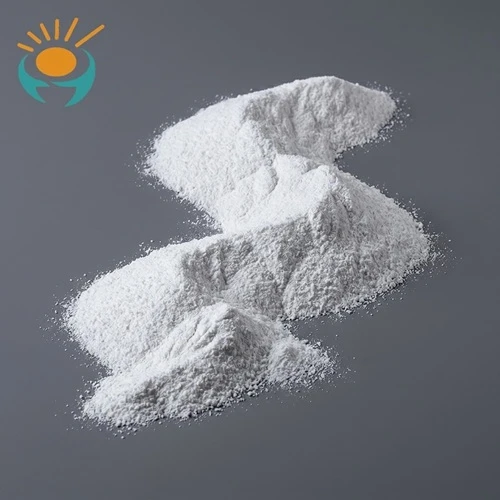
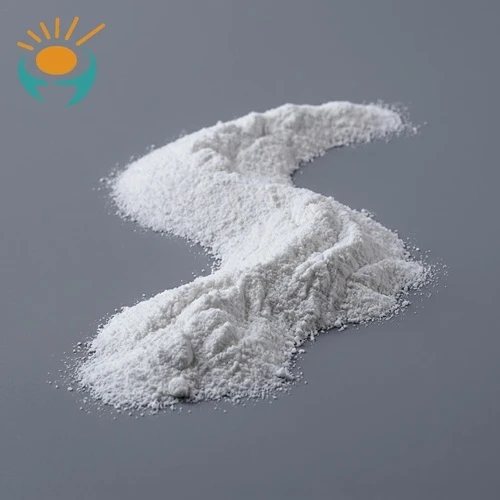
Reactive alumina is mainly used as a fine matrix component in high-performance unshaped refractories. Its small particles can fill gaps between larger alumina aggregates and participate in the sintering process during firing. Research on reactive alumina shows that particle size and distribution have a direct influence on packing and reactivity, while different PSD designs can create different balances between packing density and sintering activity.
This is why two powders with similar chemical purity may behave quite differently in a castable.
A good purchasing decision should therefore consider at least five factors: chemical composition, BET surface area, D50, D90, and particle distribution.
Why Does Na₂O Content Matter?
Na₂O is one of the first chemical indicators refractory buyers should check.
In high-temperature refractory systems, excessive alkali content can influence high-temperature behavior and may become undesirable when the formulation requires a highly stable alumina matrix. Low-soda reactive alumina is therefore commonly selected for demanding castables and technical ceramic applications. Commercial reactive alumina grades on the market commonly control Na₂O within relatively low ranges for this reason.
HUAO HA500, for example, has a typical Na₂O content of 0.08%, with a maximum of 0.10%. Its typical Fe₂O₃ is 0.02%, SiO₂ is 0.03%, MgO is 0.07%, and CaO is 0.02%.
For buyers, the important point is not simply to request "low soda," but to specify an acceptable range and check the supplier's batch consistency.
Don't Choose D50 Without Looking at D90
D50 is often the first particle-size number shown on a technical datasheet. It indicates the median particle size, but it does not describe the entire distribution.
HUAO HA500 has a typical D50 of 0.5 μm and D90 of 2.0 μm. This combination gives the buyer more useful information than D50 alone because it shows how the finer and coarser fractions are distributed.
The supplied HUAO technical table also illustrates why different grades are developed instead of using one powder for every formulation. HA180 is listed with a typical D50 of 1.8 μm and D90 of 4.5 μm, while HA150 has a typical D50 of 1.5 μm and D90 of 5.0 μm. HA120 is finer, with a typical D50 of 1.2 μm and D90 of 5.5 μm.
These differences are not merely numerical. They can change how the fine powder interacts with the aggregate system and how much water or dispersant is required during mixing.
What Does Singlet, Doublet, or Multimodal Mean?
Particle distribution is another parameter that deserves more attention during the purchasing process.
Singlet or unimodal powders have a predominant particle size population. HUAO HA500 has been determined to have a unimodal distribution. In contrast, the provided HUAO table identifies HA150 as multimodal and HA120 as bimodal.
The choice depends on the formula, not which distribution sounds technically superior. Single peak reactive alumina can provide high reactivity, while multi peak systems can provide different balances between fine-grained reactivity and filling efficiency. Research has shown that compared to narrow unimodal systems, wider or multimodal distributions can increase packing density.
Therefore, refractory material manufacturers should choose a distribution that is suitable for the existing matrix design, rather than changing the grade simply because the D50 of another product is smaller.
How Important Is BET Surface Area?
BET surface area is closely related to the amount of particle surface available for interaction. HUAO HA500 has a typical BET surface area of 7.5 m²/g, with a specified range of 6.5–8.5 m²/g.
A higher surface area can contribute to stronger reactivity, but it may also increase the powder's demand for liquid or dispersant. Therefore, "higher BET" should not automatically be interpreted as "better."
The practical question is whether the surface area works with the customer's formulation and mixing process. If the powder causes excessive water demand or makes flow control difficult, its theoretical reactivity may not translate into better castable performance.
Match the Grade to the Application
Before ordering, buyers should describe the actual refractory application.
For low-cement or ultra-low-cement castables, particle packing, rheology, water demand, and fired strength are particularly important. Reactive alumina is also used in self-flow castables, iron-runner materials, gunning mixes, purging plugs, and other high-temperature refractory systems.
If the formulation already contains a large amount of fine powder, a very high-BET grade may not always be the most convenient option. Conversely, if the matrix requires stronger sintering activity and finer filling particles, a finer reactive grade may be worth considering.
The right question is therefore not "Which grade is the best?" but "Which grade gives the best balance for my formulation?"
What Should You Ask a Reactive Alumina Supplier?
A useful quotation request should include more than Al₂O₃ content and price. Ask for:
- Na₂O, Fe₂O₃, SiO₂, MgO and CaO
- BET surface area
- D50 and D90
- Particle distribution type
- Test method used for particle-size measurement
- Typical and specification limits
- Recommended applications
- Batch-to-batch consistency
- Packaging and storage conditions
- Technical support or formulation assistance
This information makes supplier comparison much easier and reduces the risk of choosing a powder that looks attractive on paper but performs poorly in the actual castable.


Conclusion
Reactive alumina selection is a small part of refractory purchasing, but it can have a noticeable effect on the final formulation. Na₂O controls chemical cleanliness, D50 and D90 describe the particle-size range, BET provides information about surface activity, and particle distribution influences how the powder fits into the matrix.
HUAO HA500, with a typical BET of 7.5 m²/g, D50 of 0.5 μm, D90 of 2.0 μm, and singlet particle distribution, provides one example of a fine reactive alumina designed for demanding refractory matrices. The HA180, HA150 and HA120 data shown in the HUAO technical table further demonstrate that different PSD designs can serve different formulation requirements.
For buyers, the most reliable method is to start with the target performance and working conditions of the castable, and then choose the powder accordingly. If the mixing, packaging, firing behavior, and production consistency can be improved, then a slightly more expensive grade may be worth it. This is usually where the true value of reactive alumina becomes visible - not just a number on the data sheet, but the consistency of the powder from the mixing chamber to the finished refractory material.