



Zibo Huao New Materials Co., Ltd
Zibo Huao New Materials Co.,Ltd is professional manufacturer and supplier of alumina based products, including alumina ceramic series products, refractory raw materials. More than 10+ years export experiences, not only is supplier, but also is eye of clients to monitor product quality and progress of orders.
Why Choose Us
Professional Team
We have skilled workers,experienced technicians,professional sale team,very sensitive to market information, can provided value information to clients, work with client, get win-win.
Production Market
Main market: Europe, Turkey, Iran, India, Australia, England, Russia, Vietnam, South Africa, South America, Ukraine, etc.
Our Service
Our service runs throughout the whole production process from the pre-sales, product design, production and after-sales.
After -Sales
Professional and thoughtful after -sales team, let you worry about us after -sales Intimate service, strong after -sales team support.


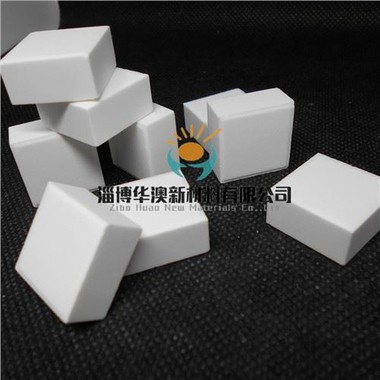
Hardness and wear resistance: Alumina ceramic has a high hardness rating, often greater than HRA80, and excellent wear resistance properties. It can withstand abrasive materials and high-velocity flows, extending the lifespan of the equipment.
Corrosion resistance: Alumina ceramic lining provides effective protection against chemical corrosion, making it suitable for use in corrosive environments.
Heat resistance: Alumina ceramic can withstand high temperatures, making it suitable for applications where elevated temperatures are present.
Flow efficiency: The smooth surface of alumina ceramic lining helps maintain the flow efficiency of systems by reducing friction and pressure loss.
Alumina Ceramic Lined Equipment Reliable Protection for Industrial Production
Alumina Ceramic Lined Equipment an important role in the industrial field. It has the characteristics of high temperature resistance, corrosion resistance, wear resistance and so on, so it is widely used in electric power, steel, metallurgy, cement and other industrial fields.
Alumina ceramic liner is made of aluminum oxide as the main raw material, which is formed and sintered at high temperature, and has excellent characteristics and advantages. First of all, it has good chemical stability, can resist acid, alkali and other corrosive media erosion; Secondly, alumina ceramic liner has the characteristics of high temperature resistance, generally can withstand temperature of about 1000℃, can maintain stability and integrity in high temperature environment; In addition, alumina ceramics also have good insulation properties, wear resistance and mechanical strength, so that it is widely used in industrial production.
Alumina ceramic liner is widely used in electric power, steel, metallurgy, cement and other industrial fields. In the power industry, it is often used in the boiler lining and chimney wall of thermal power plants, etc., because of its high temperature resistance and wear resistance, it can effectively prevent the high-temperature flue gas inside the boiler from damaging the equipment; In the steel industry, alumina ceramic lining plate is often used in the lining of the bin hopper, which can resist the wear of the material and extend the service life of the equipment; In addition, it can also be used as an acid-resistant reactor liner, which is widely used in the chemical industry.
With the development of modern industry, the demand for wear-resistant, high-temperature and corrosion-resistant materials is increasing. As a kind of high-performance ceramic material, alumina ceramic liner is expected to play a greater role in the future, providing a more reliable guarantee for industrial production.
What are Alumina Tubes Used For?



Alumina Tubes are tubes made out of alumina. They are used for a wide range of industrial applications due to their diverse properties. What are these properties, which industries use them, and how are they used? Let's find out:
What is Alumina?
The term ‘Alumina' is just a short way of saying ‘Aluminium Oxide'. Making up around 15% of the chemical composition of the Earth's crust, Aluminium Oxide is a very common material that can be found in high levels within many naturally occurring minerals. These minerals, when processed and refined, can be used to make alumina ceramics.
Alumina, once formed, has a diverse blend of properties which makes it perfect for many industrial applications. These include high values of electrical insulation, high chemical resistance, high wear resistance, and resistance to high temperatures. In short, it's a very “resistant" material, making it perfect for use in many demanding applications involving corrosive chemicals, electricity, moving components, and heat.
What are the Applications for Alumina Tubes?
In more traditional industries, alumina tubes are commonly used within industrial ovens and furnaces. They are used as:
- Insulators for electrical connections.
- Heat-resistant supports and sample holders.
- Injector tubes and gas nozzles.
- Covers and sheaths designed to protect delicate sensors.
In more cutting-edge industries, alumina tubes are widely used as components in hi-tech process equipment. Applications include:
- Parts for CVD, ion implants, photolithography, and semiconductor systems.
- A high voltage insulator in plasma cleaning systems for aluminum rolling and coating mills.
- Components for use in the chemical industry because of their high chemical/corrosion resistance.
Why Choose Alumina Ceramic Pipes Instead of Ordinary Pipes
Alumina ceramic pipes have the following advantages:
Good high-temperature resistance: Alumina ceramic pipes can withstand high temperatures up to 1300 ℃ and are not affected by melting and thermal expansion.
Good corrosion resistance: Alumina ceramic pipelines can withstand the erosion of many chemical substances, including strong acids and alkalis, and will not be corroded.
High hardness: Alumina ceramic pipes have high hardness, are not easily worn, and have strong durability.
Good insulation: Alumina ceramic pipes have good insulation performance and will not conduct electricity.
Therefore, choosing alumina ceramic pipelines can ensure good performance in harsh working environments such as high temperature and corrosion, and improve the service life and safety of pipelines.
Ceramic lined mills are a type of ball mill and are used in the size reducing or milling of hard materials such as minerals, glass, advanced ceramics, minerals for ceramics and semiconductor materials down to 1 micron or less. The residence time in ceramic lined mills is long enough that all particles are given the same treatment and result in a narrow particle size distribution. The ceramic is 90%-96% aluminum oxide (alumina) brick, which is very hard (9 on the Mohs hardness scale) and will not contaminate most products. Ceramic lined mills are simple in design and consist of horizontal cylinder lined with 1.5" to 2" thick alumina brick. The slow rotating vessels is half filled alumina grinding media ¼" to 1.5" in diameter and as the vessel rotates and the media is lifted and cascades down, the particles are milled between the grinding media by the many impacts.
Ceramic lined mills have the advantage of being self-contained so operators are not exposed to the milled product. Ceramic lined mills can be used equally well for wet or dry grinding. In the case of wet grinding, the particles are also being dispersed in the liquid medium as the particles are reduced in size. Ceramic lined mills can be fully jacketed to maintain temperatures of heat sensitive products – through the liner is thick, alumina has a very high heat transfer coefficient. Ceramic lined mills scale up well and actually improve in performance with increasing diameter. Ceramic lined mills are available in sizes from laboratory scale (also called milling jars) as small as 0.1 usg to large 5,000 gallon mills. Other mills are available with liners made from made natural rubber or polyurethane.
Why are Wear-Resistant Ceramic Linings Widely Used By Manufacturers and Factories Now?


Wear-resistant ceramic lining plate is a wear-resistant material widely used in chemical, coal, steel, electric power and other industries. It has many properties such as very high wear resistance, toughness, high temperature resistance and corrosion resistance, so many equipment manufacturers and consumers regard it as an ideal wear-resistant protection material.
High-hardness wear-resistant ceramic lining plates are made of wear-resistant ceramic materials and fired at high temperatures. Its excellent wear resistance can effectively protect the surface of the equipment from wear and scratches. In fields such as chemical industry, coal, steel and electric power, equipment often operates in high-intensity environments. The use of wear-resistant ceramic liners can significantly increase the service life of equipment and reduce equipment maintenance and replacement costs. Secondly, wear-resistant ceramic lining plates have the advantages of high toughness and high temperature resistance. It is made of high-hardness ceramic material. After being fired at high temperature, it has better strength and toughness and can withstand great pressure and impact force. In addition, when used at high temperatures, it can also show very good high temperature resistance characteristics and can meet a wide range of industrial production requirements. In addition to being wear-resistant, wear-resistant ceramic liners also have the advantage of being corrosion-resistant. The material used in the wear-resistant ceramic lining plate has good anti-corrosion characteristics and can effectively resist corrosion by chemicals such as acids, alkalis, and salts to ensure that the surface of the equipment is not damaged. In many industries such as chemical industry, coal, steel, electric power, etc., equipment is generally in harsh chemical environments. The emergence of wear-resistant ceramic lining plates is helpful to ensure that the surface of the equipment is not affected by corrosion and corrosion.
Wear-resistant ceramic lining plate is an excellent protective material with super wear resistance, high wear resistance, high temperature resistance and corrosion resistance. It can effectively protect the surface of machinery and equipment from damage, scratches, corrosion and wear. In the fields of chemical industry, coal, steel, electric power, etc., the practical value of wear-resistant ceramic linings is very important. It can greatly increase the service life of equipment, and at the same time, it can also reduce equipment maintenance and replacement costs. Therefore, wear-resistant ceramic liners are widely used and promoted by manufacturers and factories.
Process characteristics: Simple installation, low cost, and firmly bonding, very suitable for large-scale construction on site.
Process introduction
Construction process and the glue are the critical items. Ordinary epoxy glue in the market used in wear-resistant ceramic tile lining is mainly organic and has disadvantages that are not resistant to high temperatures (max 150 ℃), and it is easy to be invalid. It can not meet the requirements of long time running. Especially in the case of sudden cooling and sudden heat, the thermal expansion parameters of the ceramic tile and the steel-based material are different, and the organic glue is more brittle, the whole ceramic lining is very easy to peel off.
Welding type
Process characteristics: Double fixation, good reliability, high temperature resistance up to 750℃
Process introduction: In addition to directly adhesive glue between steel base material and ceramic tile, pre-design the ceramic tile shape, leave a center cold welding hole. When both be finished, could achieve the effect of double insurance. The cold welding type is suitable for high temperature pipes (up to 750°C) or slight impact, such as the inlet and outlet pipes of the humidification tower, the dust collecting pipes at the kiln tail, etc.
Application scope: Hot air duct, secondary/tertiary duct, flue wall, support rod, air preheater baffle, etc.
Rubber vulcanization
Process characteristics: Ceramic tile, rubber, steel plate in 2 in 1 or 3 in 1 ceramic liner by vulcanization process. Strong resistance, easy to replace, suitable for impact and abrasion of bulk materials conveying system and temperature below 120℃
Process introduction: Multiple selection, 2 in 1 ceramic liner:ceramic tile & rubber liner, ceramic tile & steel plate liner; 3 in 1 ceramic liner: ceramic tile, rubber, steel plate liner;
Application scope: Chute, hopper, drum, coal drop hopper, coal drop pipe, raw coal bunker, coal mill inlet and outlet pipe, etc.
Dovetail tile & steel bar mechanical fixing type
Process characteristics: Firm installation, high temperature resistance, suitable for moving parts, but the fixing method is much more complicated
Process introduction: Pre-design the ceramic tile in dovetail shape, combined with steel bar, plus cold welding and mechanical installation. This method is mature and reliable, can withstand high temperatures below 1000 ℃, especially suitable for the wear resistance of moving parts, such as fan impellers.
Application scope: Fan impeller, high temperature flue, waste heat power generation pipeline of cement plant, sintering dust removal pipeline, etc.
Our Factory
Alumina ceramic series products use for materials transfer equipment in mining, iron & steel work, thermal & powder plants, mine, etc. Refractory materials application is refractory products and abrasives, it is used in high temperature engineering equipment, metallurgical and chemical fields, ceramics and construction materials.


FAQ
Q: What is alumina ceramic used for?
Q: What is alumina lining?
Q: What is the most common use of alumina?
Q: Is alumina ceramic harder than steel?
Q: What is the difference between ceramic and alumina?
Q: Is alumina the same as aluminum?
Q: What is ceramic lining?
Q: Why are ceramics often chosen for applications requiring wear resistance?
Q: What does ceramic coating cover?
Q: What does ceramic protect against?
Q: What is ceramic used for in interior design?
One of the most common uses of ceramic in interior design is tiling, with many opting for this material to cover their walls and floors.
Q: What is a key advantage of using ceramics in engineering applications?
Q: What are the uses of alumina tube?
Q: What do you use alumina for?
Q: What material is alumina?
Q: Is alumina the same as aluminum oxide?
Q: What are ceramic linings made of?
Q: What are examples of ceramic materials?
Q: What is the healthiest cookware to use?
Q: Why is ceramic coating so popular?
We're well-known as one of the leading alumina ceramic lined Equipment manufacturers and suppliers in China for our quality products and good service. Please feel free to buy customized alumina ceramic lined from our factory.
Alumina Ceramic Lined Project, Alumina Ceramic, Alumina Ceramic Lined Cyclones