



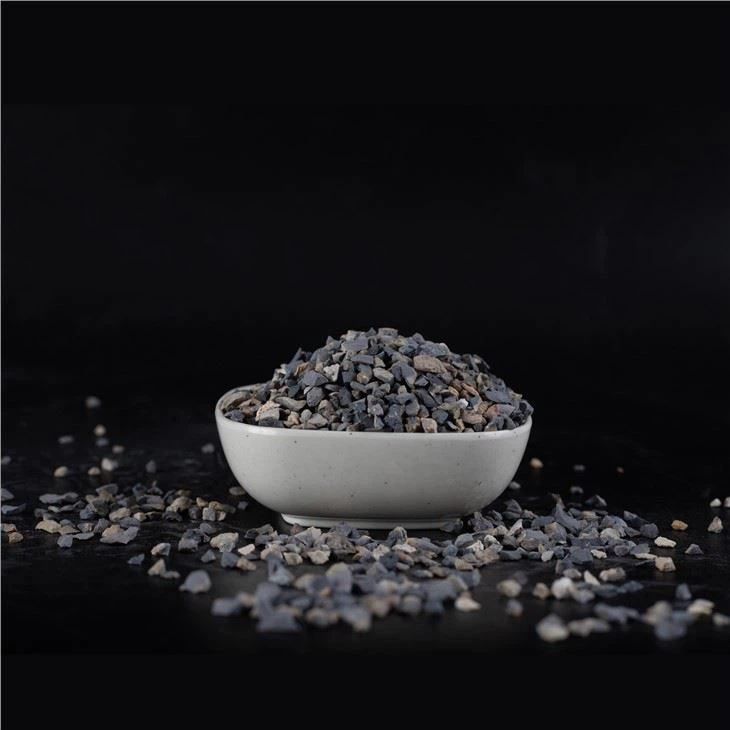
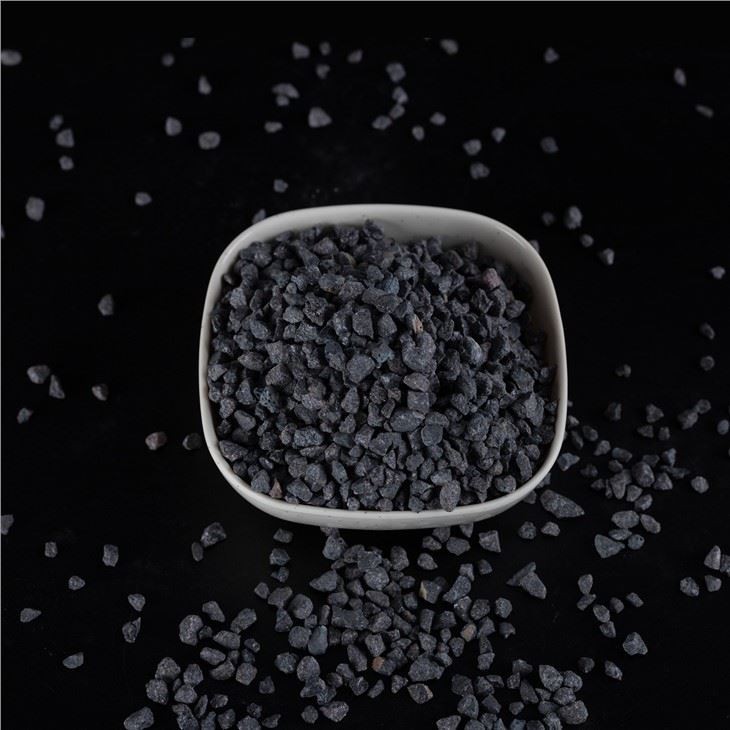
Brown Tabular Corundum Used in Refractory Bricks
Description
Technical Parameters

Products Description
Brown tabular corundum used in refractory bricks is a high-purity sintered alumina aggregate, which serves as the main structural raw material for high alumina refractory bricks, castables, and integral linings, serving the steel, cement, glass, and petrochemical industries. Made from calcined alumina and aluminum, Al₂O₃≥ 99% can form a unique plate-like α - Al₂O₃ crystal structure without sintering aids at temperatures above 1900 ° C, with a bulk density of ≥ 3.50g/cm ³, an apparent porosity of less than 3%, and excellent thermal shock resistance. We can provide graded particle sizes ranging from coarse aggregate (5-10mm) to medium to fine powder (325 mesh), as specified by the refractory formula designer. We require aggregates with stable size and low impurities to maintain structural integrity at temperatures exceeding 1700 ° C. The brown tone variant contains controlled trace impurities, which enhance toughness while maintaining the high alumina performance of the core shell.
The difference between tabular corundum and other alumina aggregates lies in its crystal microstructure. Unlike fused alumina, fused alumina is produced by melting raw materials in an electric arc furnace at 2000 ° C and cooling them to form subsequently broken solid ingots, while plate-like corundum is produced by sintering and calcining alumina particles at 1900-1950 ° C. During the sintering process, α - Al₂O₃ grains grow into large, flat, plate-like crystals, which are interconnected to form a dense, low porosity structure. This plate-like structure is key to excellent thermal shock resistance: flat grain boundaries deflect crack propagation, interlocking structures absorb thermal stress without catastrophic failure.
Advantages
1. Has excellent thermal shock resistance
The plate-like α - Al₂O₃ crystal structure is the decisive microstructural feature that endows plate-like corundum with excellent thermal shock resistance. When refractory bricks undergo rapid temperature changes, such as filling steel ladles with steel at 1650 ° C after preheating to 1100 ° C, or circulating in the cement kiln burner area between 1400 ° C and ambient temperature during shutdown, thermal gradients can cause uneven expansion and contraction, resulting in internal stress. In materials with equiaxed grains, these stresses propagate along grain boundaries, forming straight cracks that can split bricks. In tabular corundum, the flat boundaries of the plate-like crystals will deflect the propagation of cracks, forcing them to dissipate energy along a tortuous path. The interlocking plate structure also provides a micro crack network that can absorb thermal strain without catastrophic failure.
2. High purity ensures high temperature strength and creep resistance
At operating temperatures above 1400 ° C, the mechanical strength of refractory bricks is not determined by their cold compression strength, but by their high-temperature creep behavior, that is, their ability to resist slow deformation under sustained high-temperature loads. The creep of alumina refractory materials is mainly caused by the softening and viscous flow of glass phases at grain boundaries. Impurities such as Na ₂ O, K ₂ O, and SiO ₂ react with alumina to form low melting point sodium aluminum silicate glass, with a softening temperature as low as 1100 ° C. The total impurity content of tabular corundum is less than 1% (and Na ₂ O is less than 0.4%), which means that there is almost no glass phase softening at operating temperature.
3. Low porosity, high-density resistance to slag and metal penetration
The main wear mechanisms of ladle and intermediate ladle liners during steelmaking are slag infiltration and corrosion. The penetration depth of slag is directly proportional to the porosity and pore size distribution of refractory materials. The apparent porosity of brown tabular corundum used in refractory bricks is less than 3%, and the water absorption rate is less than 1%, which means that there are few openings for slag infiltration. The dense interlocking plate structure also provides a smooth, non wetting surface that can resist the adhesion of slag. In the application of ladle slag line, plate-shaped corundum based bricks (usually combined with MgO spinel for slag resistance) can achieve 80-120 heating cycles, while bricks made of low purity and high porosity aggregates can achieve 40-60 heating cycles.
Application
1. Steel industry
The steel industry is the largest consumer of tabular corundum refractory bricks. In the steel drum, plate-shaped corundum based bricks are arranged in the slag line (the most aggressive area where molten slag corrodes the lining at 1600-1700 ° C), the drum, and the bottom, including the porous plug blowing area. Slag line bricks typically consist of high-purity plate-like corundum and magnesium aluminum spinel (MgAl ₂ O ₄), which provide excellent slag resistance through a protective layer rich in MgO. The bucket and bottom brick are bonded with standard plate-shaped corundum and calcium aluminate cement. During the continuous casting process, plate-shaped corundum is used as the working lining of the intermediate ladle, sliding gate, and immersion nozzle. Its high purity and thermal shock resistance can prevent nozzle blockage and ensure the consistency of steel quality.
2. Cement industry
The cement rotary kiln operates in the combustion zone of 1400-1500 ° C, where raw materials are calcined to form clinker. The lining must be able to withstand high temperatures and alkaline vapors (K ₂ O, Na ₂ O, SO3) evaporating from the raw material and condensing in the lining, causing alkaline erosion and peeling. Plate shaped corundum based bricks are usually combined with silicon carbide (SiC) to improve oxidation resistance and thermal conductivity, and are used in the transition zone where thermal cycling and alkali erosion are most severe. In the combustion zone, alkaline bricks (magnesium spinel) are usually used, but tabular corundum bricks are used for lower transition and calcination zones, and alumina based bricks have better alkali resistance and thermal shock resistance. Plate shaped corundum is also used in preheater cyclone separators, calcination furnace pipelines, and cooler grilles.
3. Glass industry
The temperature of the glass melting furnace at the melting end is 1500-1600 ° C. The heat storage chamber - a large brick structure that preheats combustion air by recovering waste heat - operates at 1200-1500 ° C and is exposed to alkaline batch dust, which corrodes the lattice bricks. Plate shaped corundum based lattice bricks are used in the upper and hotter areas where alkali corrosion is most severe, because their high purity and low glass phase content are more resistant to alkali corrosion than refractory clay or low alumina bricks. Plate shaped corundum is also used in the upper structure of furnaces (roof, side walls), feed channels, and furnace chambers, where thermal shock resistance and dimensional stability are crucial. In borosilicate and E-glass furnaces (1550-1650 ° C, more corrosive batches), high-purity plate-like corundum bricks are crucial for long service life (8-12 years for container glass furnaces).
4. Petrochemical industry
In petrochemical plants, brown tabular corundum used for refractory bricks can also be used in steam methane reformers, ethylene cracking furnaces, ammonia converters, and sulfur recovery units. The steam reformer operates on the process side at 800-950 ° C and the fire side at 1000-1100 ° C, with catalyst filling tubes producing hydrogen from natural gas. The furnace lining must be able to withstand thermal cycling, reducing atmosphere (H ₂, CO), and burner vibration. Plate shaped corundum based castables and bricks are used for radiation section walls, roofs, and burner blocks due to their high temperature strength, thermal shock resistance, and reduced atmospheric stability. In the ethylene cracking furnace, the pyrolysis gas contains coke precursors that carbonize refractory materials, and high-purity plate-like corundum with low iron content can minimize the formation of catalytic coke. In the sulfur recovery unit, the process gas contains H ₂ S and SO ₂. Within the temperature range of 200-400 ° C, the sheet-like corundum bricks have excellent corrosion resistance and a long service life.
Technical Specifications
| Component | Standard Grade (%) | High-Purity Grade (%) | Brown Variant (%) |
|---|---|---|---|
| Al₂O₃ | ≥99.0 | ≥99.5 | ≥98.5 |
| SiO₂ | ≤0.30 | ≤0.15 | ≤0.50 |
| Fe₂O₃ | ≤0.15 | ≤0.08 | ≤0.30 |
| TiO₂ | ≤0.10 | ≤0.05 | ≤0.40 |
| Na₂O | ≤0.40 | ≤0.20 | ≤0.40 |
| CaO | ≤0.10 | ≤0.05 | ≤0.15 |
| MgO | ≤0.05 | ≤0.03 | ≤0.10 |
| K₂O | ≤0.05 | ≤0.03 | ≤0.05 |
| Total Impurities | ≤1.0 | ≤0.5 | ≤1.5 |
Basic Info.
| Model NO. | ZBHA |
| Bulk Density | 3.5g/cm³ |
| Moisure | 1.5% |
| Spercification | 5-8/10mm, 3-5/6mm, 1-3mm, 0-1mm, 325mesh |
| Origin | China |
| Production Capacity | 15000 tons |
| Color | White |
| Porosity | 5% |
| Transport Package | Jumbo Bag |
| Trademark | HUAO |
| HS Code | 2818109000 |
Why choose us?
1. We understand refractory materials from the perspective of formula
Choosing corundum aggregate is not just a matter of selecting the highest alumina content. Refractory material manufacturers also need to consider particle size, bulk density, porosity, thermal conditions, and final forming process. We communicate with customers about the expected refractory material products in order to evaluate the supplied materials as part of the complete formula.
2. Pay attention to the particle size distribution
Refractory mixtures typically contain multiple particle sizes. Coarse particles form a structural skeleton, while fine particles fill some of the space between them. Appropriate grading can affect the behavior of fillers, porosity, and required adhesive dosage. We can discuss the required scores based on the customer's production process, rather than treating each order as a standard specification.
3. Suitable for high alumina refractory material formula
Plate shaped corundum is produced by sintering alumina without adding typical sintering additives, resulting in a highly developed α - Al ₂ O3 crystal structure. This makes it an important raw material for refractory formulations that require high alumina aggregates. The selection should still match the specific work environment.
4. Low porosity is very useful in refractory material design
Openings can provide a pathway for molten materials, gases, or corrosive components to penetrate refractory materials. When the complete refractory material formula is designed, dense aggregates with relatively low apparent porosity can help limit this infiltration. This is one of the reasons why density and porosity are meaningful procurement parameters rather than just numbers for specification sheets.
FAQ
Q1: If tabular alumina is usually white, why is it called "brown" tabular alumina?
A1: Standard tabular alumina is white or off-white because of its high purity (≥99% Al₂O₃, minimal impurities). The "brown" variant contains controlled trace impurities-primarily TiO₂ (0.2–0.4%) and Fe₂O₃ (0.15–0.30%)-that impart a light brown to amber coloration. These trace impurities are not contaminants that degrade performance; rather, they are intentionally controlled to enhance sintering behavior (TiO₂ promotes alumina densification) and toughness (Fe₂O₃ in solid solution strengthens the crystal lattice). The brown variant maintains Al₂O₃ ≥98.5% and all core performance properties (bulk density ≥3.50, porosity ≤3%, RUL ≥1650°C) while offering a cost advantage over the ultra-high-purity white grade. It is suitable for most refractory applications where the absolute highest purity is not required.
Q2: What particle size grade should I use for my refractory material formula?
A2: The choice of particle size depends on your application and formulation goals. General guidance: Coarse aggregate (5-10mm, 3-5mm) provides structural framework and thermal shock resistance - using 35-50% of the total aggregate; Medium particle size (1-3mm) bridging thickness - use 20-30%; Fine powder (0-1mm, 325 mesh) is used to fill gaps and help increase matrix density - using 25-40%. For dense high-strength bricks, use a continuous grading of 40:30:30, coarse: medium: fine. For heat-resistant castables, use more coarse aggregates (50:25:25). For low cement self flowing castables, use more fine and ultrafine powders (35:25:40). We can provide customized PSD mixtures that match your target distribution curve.
Q3: What is the typical service life of tabular corundum based refractory bricks?
A3: The service life depends on the severity of the application, brick quality, installation quality, and operational practice. Typical range: Ladle slag line (spinel bonding) -80-120 furnaces; Steel ladle/bottom -100-150 furnaces; Intermediate package working lining -20-40 furnaces; Transition zone of cement kiln (SiC bonding) -12-18 months; Cement kiln calcination area -18-24 months; Upper area of glass furnace heat storage chamber -5-8 years; Upper structure of glass melting furnace -8-12 years; Petrochemical conversion furnace radiation wall -5-10 years. These are typical ranges; The actual performance varies. We can provide lifespan estimates for specific applications based on your operating conditions.
Q4: Can tabular corundum be used for castables (amorphous refractory materials)?
A4: Yes. Tabular corundum is widely used in low cement castables (LCC), ultra-low cement castables (ULCC), cementless castables, self flowing castables, and shotcrete/patching mixtures. Its low water absorption rate (≤ 1%) means that it requires a low amount of water in the casting formula, which is crucial for achieving high density and strength after curing and firing. The plate-like crystal structure also improves the flowability of the castable mixture by reducing inter particle friction. For castable applications, we recommend mixing 3-4 particle size fractions (coarse 5-8mm, medium 1-3mm, fine 0-1mm, powder 325 mesh) to form a continuous PSD, mixed with activated alumina powder (≤ 0.045mm), calcium aluminate cement (2-8%, depending on the type of castable), and dispersant.
Get a Tailored Tabular Corundum Solution for Your Refractory Application!
Hot Tags: brown tabular corundum used in refractory bricks, China, manufacturers, suppliers, factory, customized, buy, White Tabular Corundum, Ceramic Mocaic Tiles, Alumina Ceramic Packing Ball, Zirconia Alumina Balls, Alumina Ceramic Grinding Balls, Mosaic Tiles
Previous
99 Alumina Ceramic TileNext
95% Al2O3 BallsSend Inquiry


