

Calcined Alumina or Reactive Alumina, which Alumina Powder is more suitable for you?
Oct 20, 2026
Leave a message
In the realm of advanced technical ceramics, high-performance refractories, and precision manufacturing, selecting the correct alumina raw material is a vital engineering decision. Among the diverse fine powder options available, Calcined Alumina and Reactive Alumina stand out as two primary material classes. Although both types of alumina powders are derived from high-purity alumina, their unique particle size distribution, surface area, sintering behavior, and industrial applications meet vastly different performance requirements. As a professional manufacturer and global supplier, HUAO provides a detailed explanation in the following text to help you determine which alumina powder is suitable for their specific application.
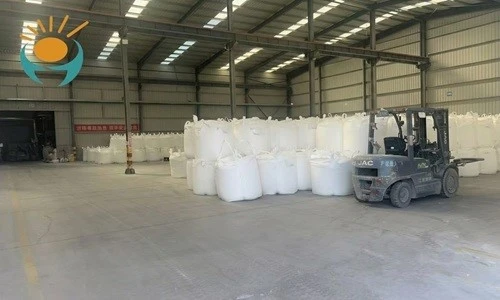
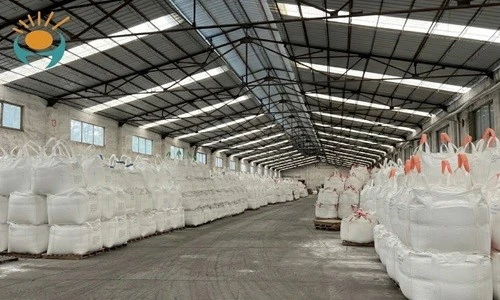
The above two pictures are the warehouses of our Alumina Powder factory
1. Fundamental Characteristics and Microstructural Differences
The primary distinction between calcined alumina and reactive alumina lies in their physical fineness, specific surface area, and crystal morphology:
Calcined Alumina (e.g., HA-1 and HA-2 Grades):
Processed from low-sodium raw materials via micro-grining and advanced refining, calcined alumina typically exhibits a median particle size (D50) of 4 to 5 um, with a 325-mesh residue of ≤ 1%. It features a high alpha-Al₂O₃ density of ≥ 3.90 to ≥ 3.94 g/cm³ and high melting points, making it exceptionally stable under extreme thermal and mechanical stress.
Reactive Alumina (e.g., HUAO HA500 Grade):
Designed as an ultra-fine, high-purity alpha-alumina micro-powder, reactive alumina features a sharp singlet particle size distribution with a median D50 of 0.5 um (ranging from 0.3 to 0.6 um) and a high BET specific surface area of 7.5 m²/g. Its ultra-fine nature is specifically engineered to optimize matrix grain packing density in monolithic systems.
2. Comparative Technical Parameters and Chemical Profiles
Reviewing the physical and chemical specifications highlights the operational advantages of each product line:
Purity and Al₂O₃ Content:
Calcined Alumina grades maintain high purity, with HA-1 achieving ≥ 99.3% Al₂O₃ and HA-2 reaching ≥ 99.6% Al₂O₃.
Reactive Alumina (HA500) focuses on ultra-low impurity levels, featuring strict control over Na₂O (≤ 0.10%), Fe₂O₃ (≤ 0.03%), SiO₂ (≤ 0.07%), and MgO (0.05% to 0.10%).
Particle Size and Surface Area:
Calcined alumina has a coarser D50 of 4-5 um, ideal for structural ceramic bodies and polishing media where uniform hardness and high resistivity are required.
Reactive alumina features a fine D50 of 0.5 um and a high BET surface area of 6.5 to 8.5 m²/g, promoting rapid sintering and tight particle packing.
3. Application Suitability: When to Choose Which?
Matching the material properties to your manufacturing process dictates the ideal choice between calcined and reactive aluminas:
Choose Calcined Alumina if: You are manufacturing architectural ceramics, electronic component substrates, spark plugs, structural ceramic parts, abrasive polishing media, or standard refractory shapes. Calcined alumina delivers superior mechanical strength, high electrical resistivity, high thermal conductivity, and excellent wear resistance for components subjected to heavy mechanical loads and high-voltage insulation.
Choose Reactive Alumina if: If you need to manufacture architectural ceramics, electronic component substrates, spark plugs, structural ceramic parts, grinding and polishing media, or standard refractory material shapes, choose Reactive Alumina. It has excellent mechanical strength, high electrical resistivity, high thermal conductivity, and excellent wear resistance, and can withstand heavy mechanical loads and high-voltage insulation components well.
4. Quality Assurance and Global Supply with HUAO
Whether your process demands the structural hardness of calcined alumina or the matrix-densifying power of reactive alumina, batch-to-batch consistency is essential for predictable manufacturing results. HUAO operates under certified international management systems-including ISO9001 (Quality), ISO14001 (Environment), and ISO45001 (Occupational Health & Safety)-to guarantee stringent quality control across all production lines. To ensure safe transit and prevent moisture absorption, HUAO supplies both powder lines in 25 kg double layers woven bags or 1000 kg / 1250 kg /1350kg Jumbo Bags (Ton Bags), with custom packaging options available to meet specific client logistics requirements.
Based on the above article, Calcined Alumina is mainly used in structural ceramics, electronic substrates, and wear-resistant applications, while Reactive Alumina is more commonly used in advanced integral refractory castables that require high density and low water demand.
If you want to know more about Calcined Alumina or Reactive Alumina, please click it.