
What Are the Differences Between Grinding Balls and Inert Balls?
Oct 30, 2026
Leave a message
Choosing the appropriate alumina ceramic spherical medium is crucial for operational safety and mechanical efficiency in heavy industrial processing. Practitioners often encounter ceramic spheres in various unit operations, leading to doubts about their specific names. A common evaluation point in industrial procurement is to understand the differences between alumina ceramic grinding balls and traditional ceramic carriers or inert balls in terms of structural morphology, mechanical properties, and operational applications. As a leading manufacturer and global supplier, HUAO provides detailed technical insights for these different categories of alumina media.
Functional Definitions and Core Purposes
The fundamental distinction between grinding balls and inert balls lies in their intended mechanical role within an industrial vessel:
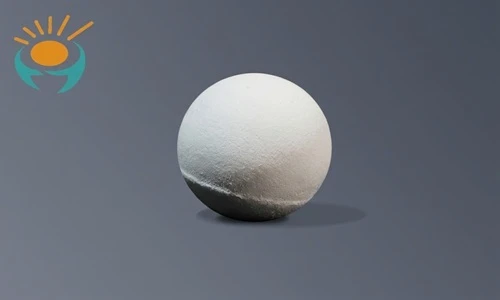
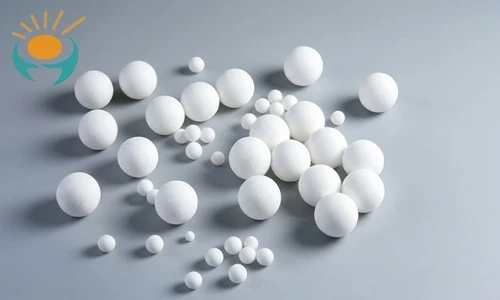
Alumina Ceramic Grinding Balls:Specially designed for reducing size, crushing, and material dispersion. These high-density balls are placed in rotary ball mills, agitator mills, or continuous grinding equipment to crush raw minerals, ceramic bodies, and chemical slurries.
Alumina Ceramic Inert Balls (Support Media): Mainly used as packing and supporting bed medium in chemical reactors, fixed bed catalytic towers, and petroleum hydroprocessing units. Inert balls are used instead of grinding to evenly distribute fluid flow, support heavy catalyst layers, and withstand high-temperature reactor environments without participating in chemical reactions.
Technical Parameter Benchmarks and Material Properties
While both types utilize high-purity alpha-alumina, grinding media require extreme mechanical thresholds to survive continuous impact:
Chemical Purity: HUAO high-density grinding balls maintain an Al₂O₃ content ranging from ≥ 92% (AH-92) to ≥ 95% (AH-95).
Density and Hardness: Grinding balls demand a high bulk density of ≥ 3.65 g/cm³ to ≥ 3.68 g/cm³ and an extreme Mohs hardness of 9 to maximize impact force and minimize wear loss (≤ 0.01%).
Surface Integrity: Grinding media require uniform spherical integrity and near-zero water absorption (≤ 0.01%) to prevent slurry contamination during wet or dry milling cycles. In contrast, inert support balls focus on crush strength and thermal shock resistance under static or packed-bed fluid pressures.
Application Environments and Equipment Compatibility
The operating environment determines whether to use grinding balls or supporting media:
Grinding Ball Usage: Applied in ceramic manufacturing, mining operations, chemical processing, and cement plants for raw material grinding, glaze preparation, and ultrafine mineral grinding. They operate dynamically in stirred mills, intermittent mills, and continuous ball mills.
Inert Ball Usage: Static deployment in petrochemical towers, gas absorbers, and chemical synthesis reactors, where fluid flows through a ceramic ball packed bed at high temperature and pressure.
Advantages of HUAO Alumina Ceramic Media
Sourcing industrial ceramics from HUAO guarantees rigorous manufacturing oversight and reliable performance:
Manufactured under ISO9001, ISO14001, and ISO45001 certified management systems to ensure batch uniformity. Available in customized size distributions packaged securely in 25 kg bags or 1000 kg / 1250 kg / 1350 kg Jumbo Bags (Ton Bags) to prevent transit damage.
Grinding balls are dynamic milling tools designed for high-impact size reduction, whereas inert balls function as static support beds for fluid distribution and reactor protection.
If you want to know more about Alumina Ceramic Grinding Media, please click it.